English translation of the original personal essay; historical observations, figures and legal discussion reflect its publication date.
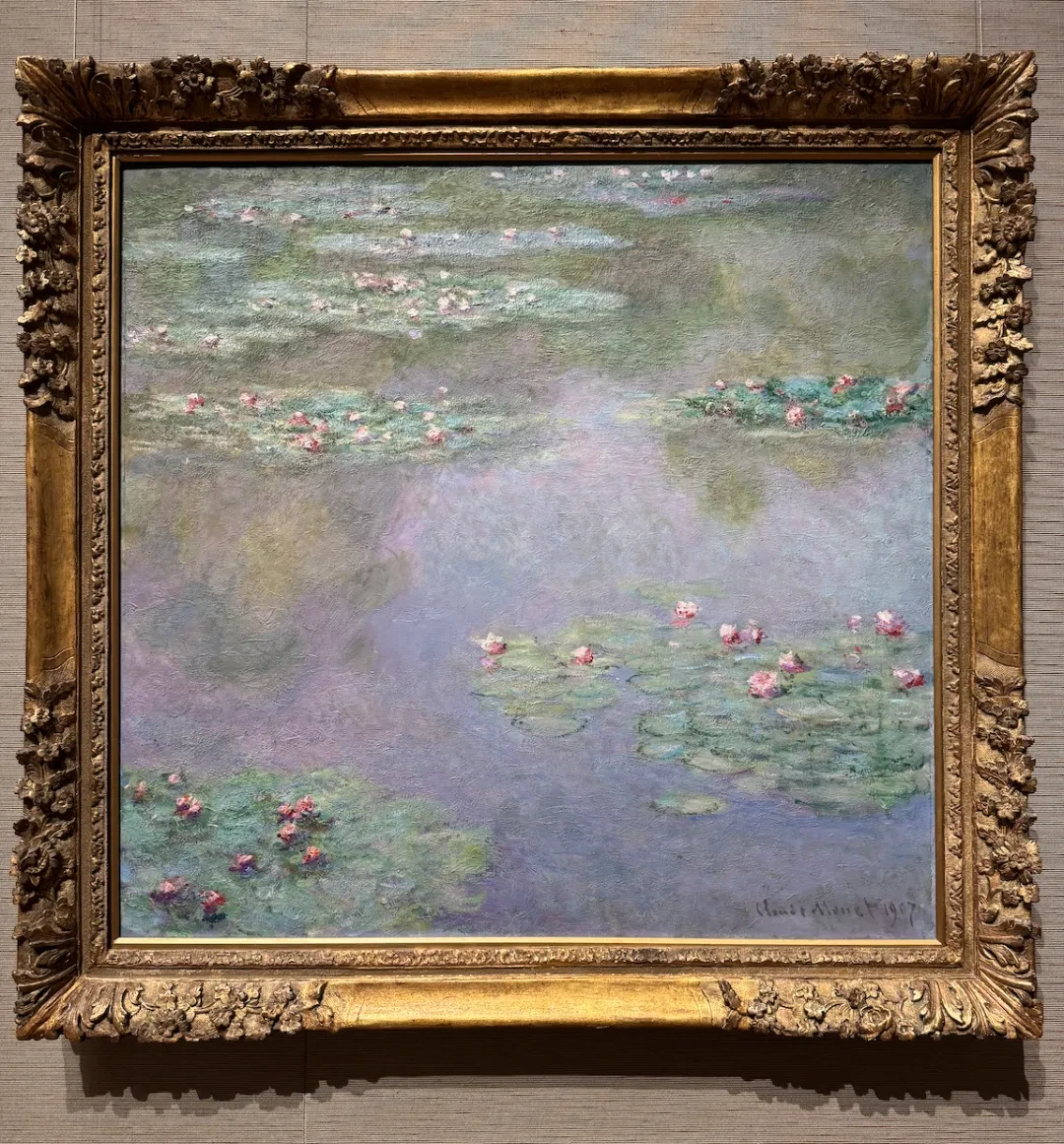
Water Lilies (1907). Photograph by Mingyue Gao.
Lawyers are all concerned with know-how, yet rarely give much attention to know-why. But know-how keeps changing, leaving lawyers chasing details and losing their bearings. For those of us in law, know-why matters more. Know-how can be copied; know-why reaches the mind and the soul and becomes truly our own. The difficulty is that we must ask and work through the “why” ourselves. It takes effort, unlike simply borrowing a ready-made approach. Copying is easy; creating something original is exhausting. Litigation offers an example: looking for similar cases as references is perfectly reasonable, but we must never merely echo what others say. We need to think for ourselves, ask more questions about why, and ultimately find our own value-oriented reasoning, rather than become submerged in purely instrumental reasoning.
Asking questions is itself a process of seeking understanding and learning. In a one-hour class at Yale, the professor speaks for less than half the time, leaving the rest for students’ questions. The Q&A is often more compelling than the lecture itself. It brings to mind Confucius: “I do not enlighten those who are not striving to understand, or help those who are not struggling to express themselves. If I show one corner and they cannot infer the other three, I do not repeat the lesson.” Does this kind of interaction still exist in universities back home? It seems increasingly rare. The Book of Rites also says: “Through learning, one discovers one’s shortcomings; knowing them, one can reflect upon oneself.” Returning is the movement of the Dao. Moving from awareness of our limitations to self-reflection is a process of investigating underlying principles—the process expressed in Socrates’ “I know that I know nothing”, the process of philosophy and reflective inquiry. It brings us ever closer to truth and to the authentic nature of existence. Such inquiry is not undertaken merely to obtain an answer: the process itself is the answer. Its direction is clear—towards existence itself. It therefore offers a hazy, evocative approach to being, with that very haziness forming part of existence. It is certainly not a beautifying filter that falsifies what exists.
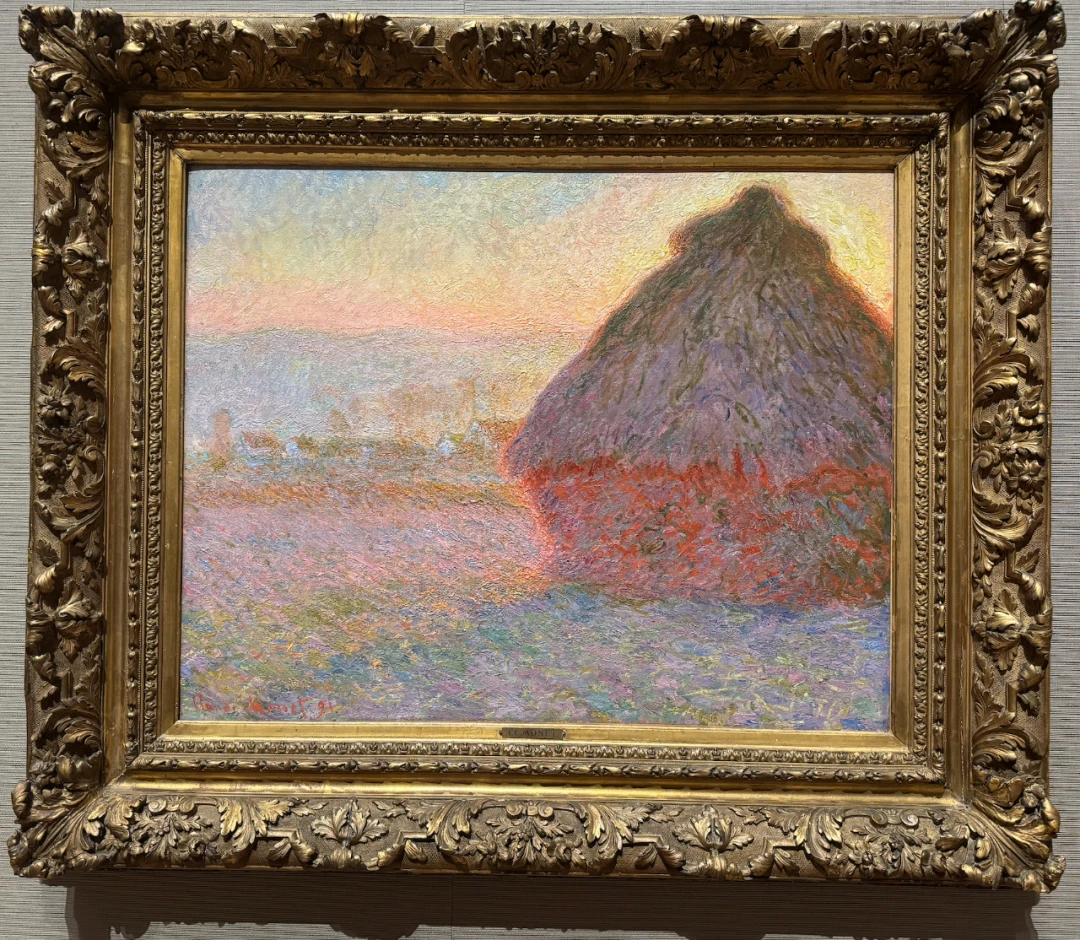
Grainstack (Sunset), 1891. Photograph by Mingyue Gao.
Haziness can create an evocative realm; beauty is the atmosphere within it. Think of Monet’s paintings at Boston’s Museum of Fine Arts. A leading figure of Impressionism, Monet spent his life exploring how to capture fleeting changes in light and atmosphere. The museum holds 35 works by Monet, the largest collection outside France. His viewpoints, approached through roads, fields and rivers; his reflections in the water-lily pond series; his atmosphere, shaped by shifting light and shade… The artistic tension in Monet’s work comes not from the technique of indistinct impressions alone, but from the unquestionable naturalness and truth behind that hazy atmosphere. In The Birth of Tragedy, Nietzsche writes: “We have art in order not to perish of the truth.” Nietzsche does not deceive us: art is certainly not an escape from reality, but the highest affirmation of the truth of life.
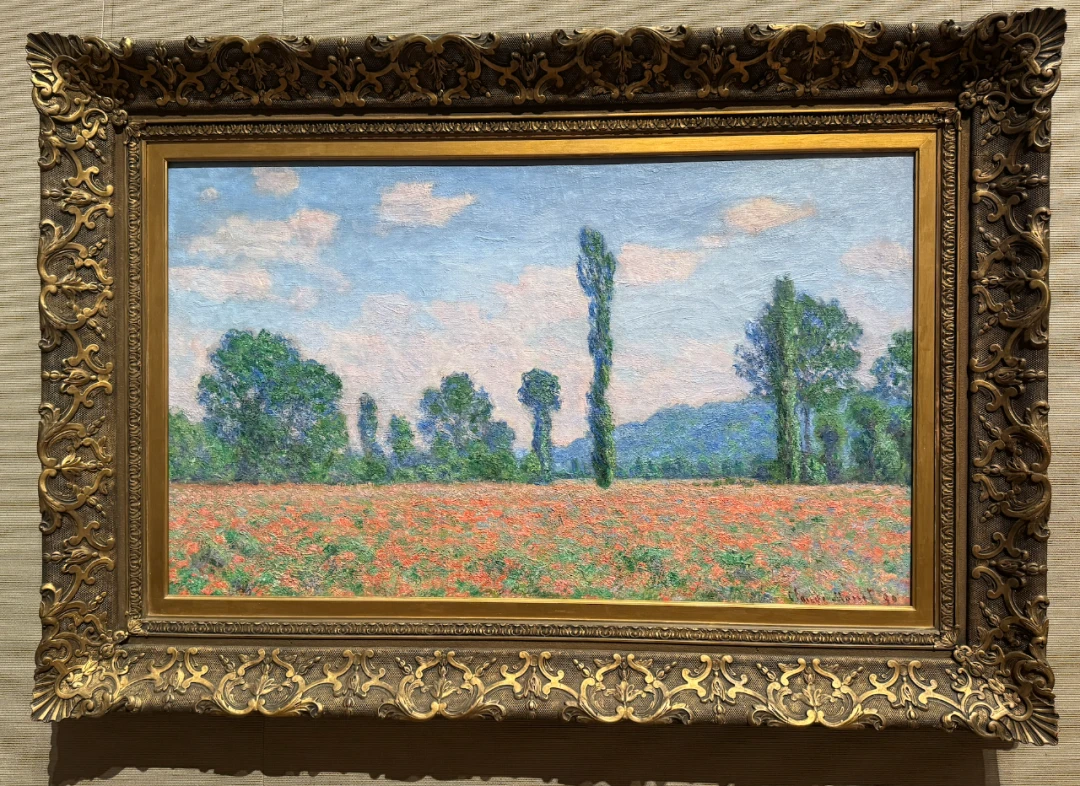
Field of Poppies near Giverny, 1890. Photograph by Mingyue Gao.
Those who love learning must, then, be people who continually reflect and seek truth—not people who imprison thought or forbid reflection. Those who love life must be drawn to philosophy and sensitive to beauty—not narrow-minded people who reject art. In this age of transparency, exposure, relentless competitive pressure and compulsion, we need the kind of hazy art Monet offers, opening a path towards the authentic nature of existence. Art can reveal life’s suffering and absurdity; through its aesthetic transformation, it can also help people of our time recognise: even so, I still wish to go on living!
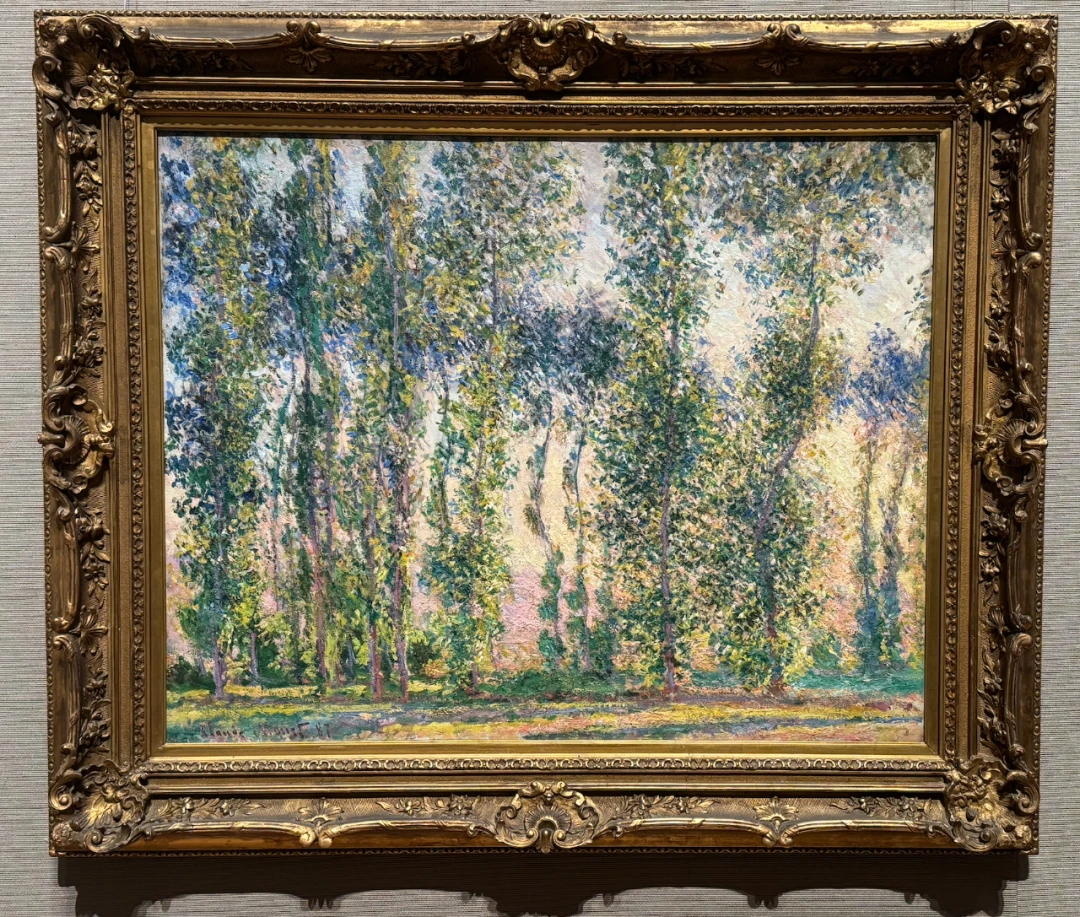
Poplars at Giverny, 1890. Photograph by Mingyue Gao.
End.