English translation of the original personal essay; historical observations, figures and legal discussion reflect its publication date. Some photographs were not embedded in the supplied PDF; available images and the original captions are retained.
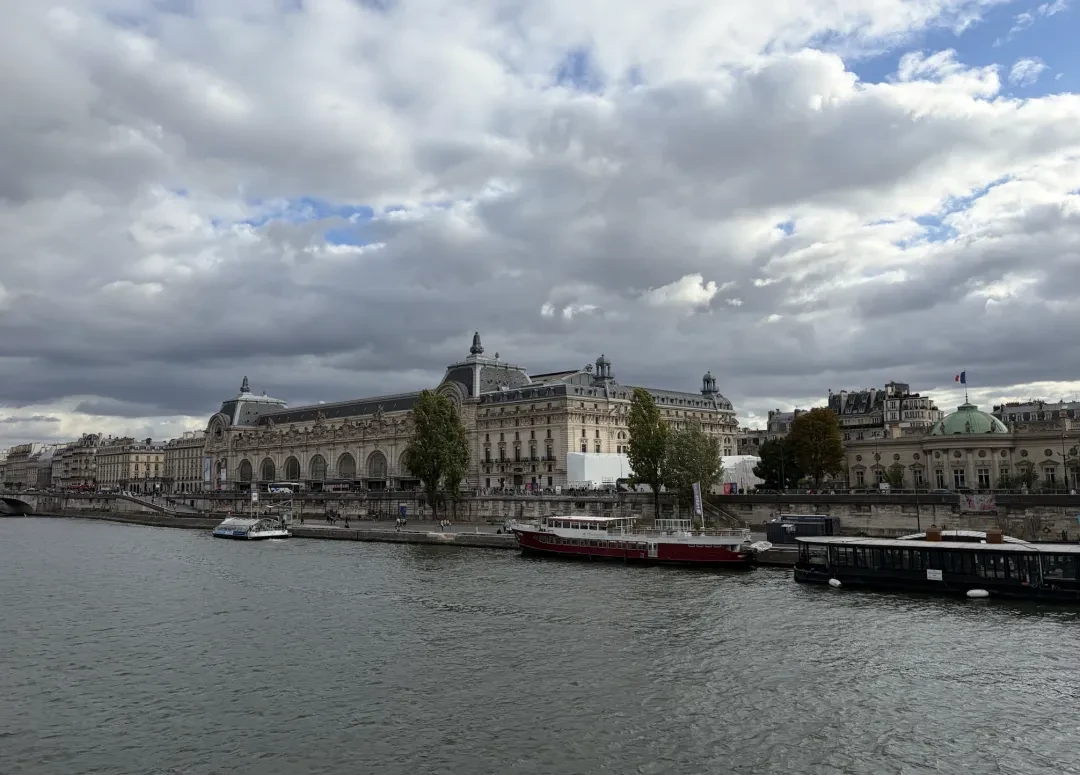
The Musée d’Orsay seen from a bridge over the Seine · 10 October 2026
Walking from the Louvre into the Musée d’Orsay, I found my questions taking a different direction.
The Louvre had made me think about the long span of history: how the human body is preserved, how power is represented, and what a finite life can leave behind. On the fifth floor of the Musée d’Orsay, standing before Monet’s paintings, I cared more about the moment in front of me. Sunlight fell on dresses; red flowers dotted a hillside; shadows on snow carried a hint of blue; the reflection of a bridge reached into the water. These things seemed small, yet they made me want to stop.
As I looked, a line by Tao Yuanming came to mind: “Here lies a true meaning; as I try to explain it, words have already slipped away.” Colour, light and shadow had already allowed me to grasp something, but not yet to form a conclusion I could clearly express. I wanted to look a little longer and let the feeling unfold. Time without the pressure to produce an answer had become somewhat unfamiliar to me.
Over the years, work, study trips and visits to friends have taken me to many places and many museums. From Los Angeles to New York, Boston to Amsterdam, and The Hague to Paris, the itineraries have grown longer and the photographs more numerous. I treasure these experiences, but sometimes ask myself: am I truly looking at a place, or completing an ever-lengthening checklist?
Find the masterpiece, confirm its title, take a photograph, then move on to the next. A museum visit can be organised efficiently, but looking does not necessarily happen to schedule. A painting may be recognised in seconds, yet take much longer to connect with one’s own life. I take photographs too. They preserve details and allow experiences years apart to speak to one another again. Whether I am willing to stay after pressing the shutter is another question.
Before Monet, I wanted to give that time back to myself.
In The Burnout Society, Byung-Chul Han examines a modern condition: we increasingly treat ourselves as projects requiring constant management, continually demanding that we realise our potential and improve our performance. External demands become internal motivation, making choice difficult to separate from pressure. Even with nobody behind us urging us on, we often feel we ought to do more.
Reading must yield something; travel must broaden the mind; exercise must improve the numbers; rest must restore our condition. Every activity has a further use, every stretch of time is expected to produce an explainable result. Sometimes we even hope that appreciating art will eventually become knowledge, a talking point or an essay.
As a lawyer, I understand the importance of results: cases have deadlines, promises must be honoured, and rights must be made effective. But might the necessary measures of professional life quietly expand until they take over the way we judge all of life?
If an afternoon achieves nothing, does it lack value? If a feeling cannot yet be put into words, is it not worth lingering with?
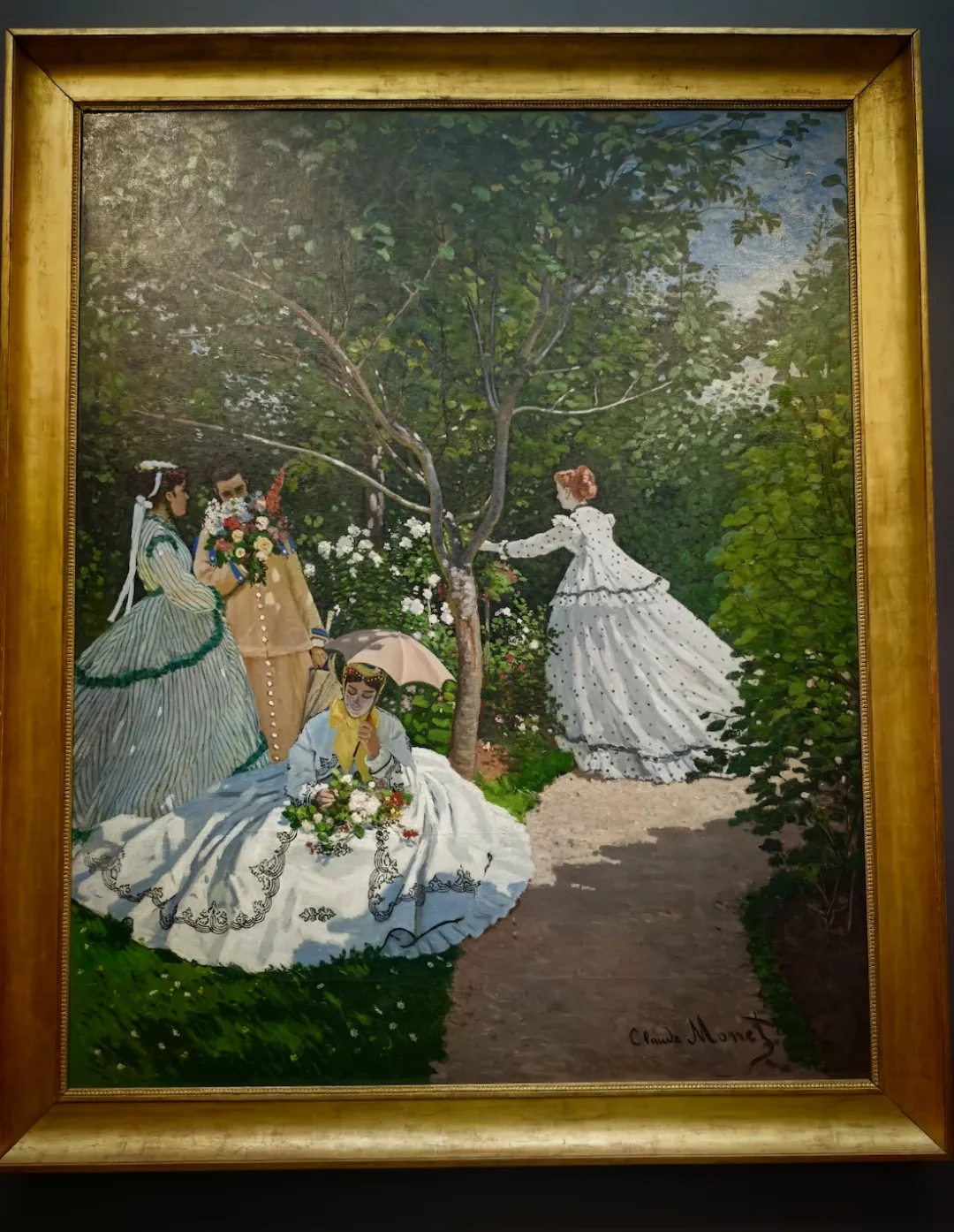
Women in the Garden · 10 October 2026 · Musée d’Orsay
Monet’s Women in the Garden made me want to reconsider these questions. Four women stand among trees and flowers, their long dresses spreading out to receive sunlight and to be divided by shade. The whites are not uniform: some areas glow, while others turn to a soft, subdued grey. The volume of the skirts, the figures’ poses, the position of tree trunks and the direction of the path together organise the space. An everyday garden scene acquires a striking scale, and natural light becomes a powerful means of expressing the relationship between people and their surroundings.
What I most wanted to study was the boundary between sunlight and shadow on the dresses. The garment remains the same, but as the light changes, so does its appearance. I know it is white, yet the word “white” does not exhaust how it looks at this moment. The direction of the light, the colours around it and the folds of the fabric all take part in what appears.
I thought of two lines from Wang Wei’s “Deer Enclosure”: “Returning sunlight enters the deep forest, and shines once more upon the green moss.” The reflected light of the setting sun enters the woods and falls on the moss. The trees and moss were already there; the arrival of light gives them a particular moment of appearance. Between “enters” and “shines” there is movement, and there is time. We know that this beam will not stay there forever.
Wang Wei and Monet belong to different cultures and histories, yet they gave me similar experiences of looking: familiar things can become worthy of attention again through a momentary change in light. Such attention is easily lost in everyday life. Knowing someone’s identity, we assume we understand them; knowing a road, we stop looking along the way; defining a way of life, we cease to ask about its subtle feelings. Knowledge helps us understand the world, but can also end an encounter too soon. Monet encouraged me to retain some curiosity about things I already “know”. That curiosity continued in two Studies of a Figure Outdoors.
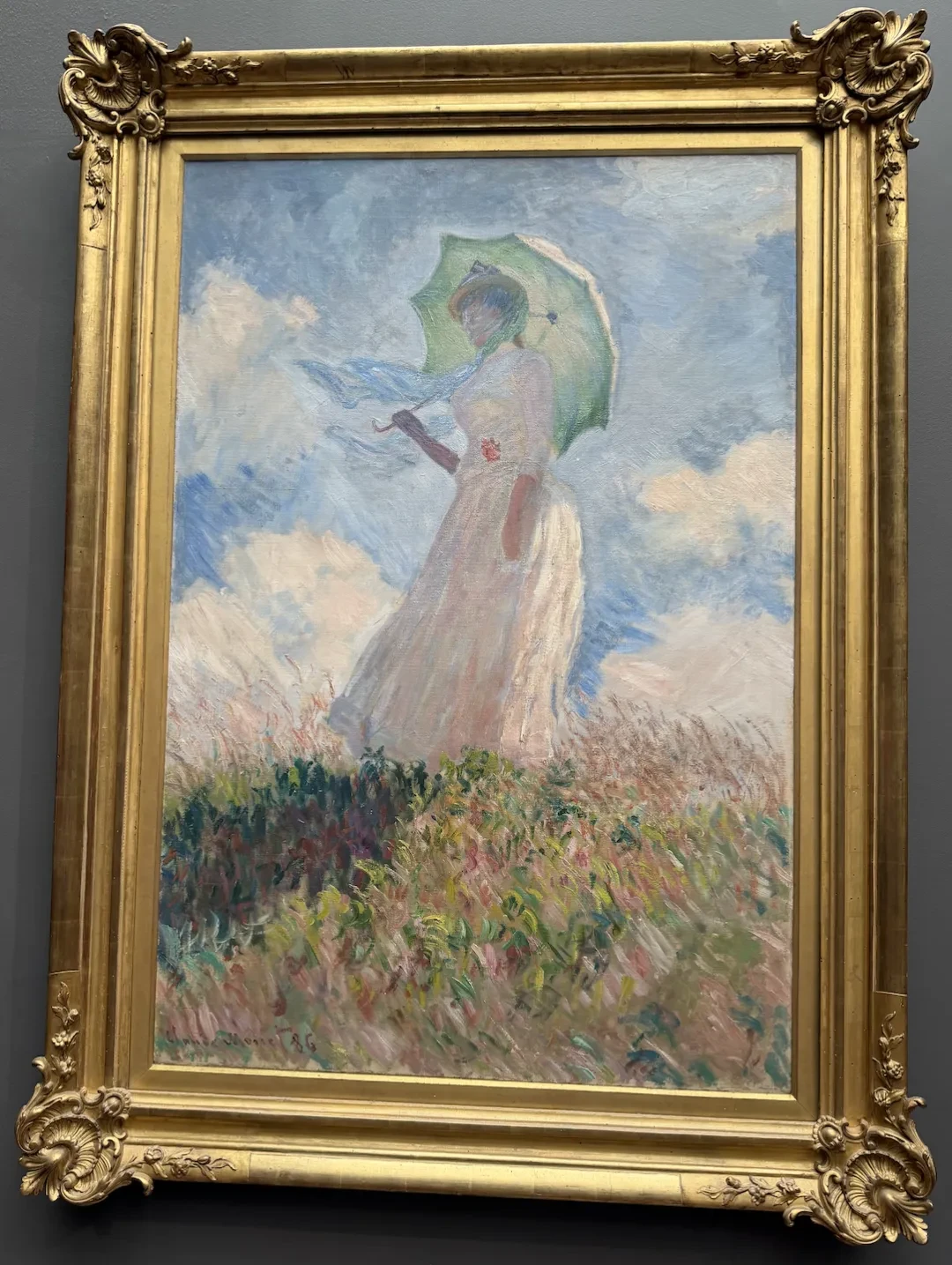
Study of a Figure Outdoors (Facing Left) · 10 October 2026 · Musée d’Orsay
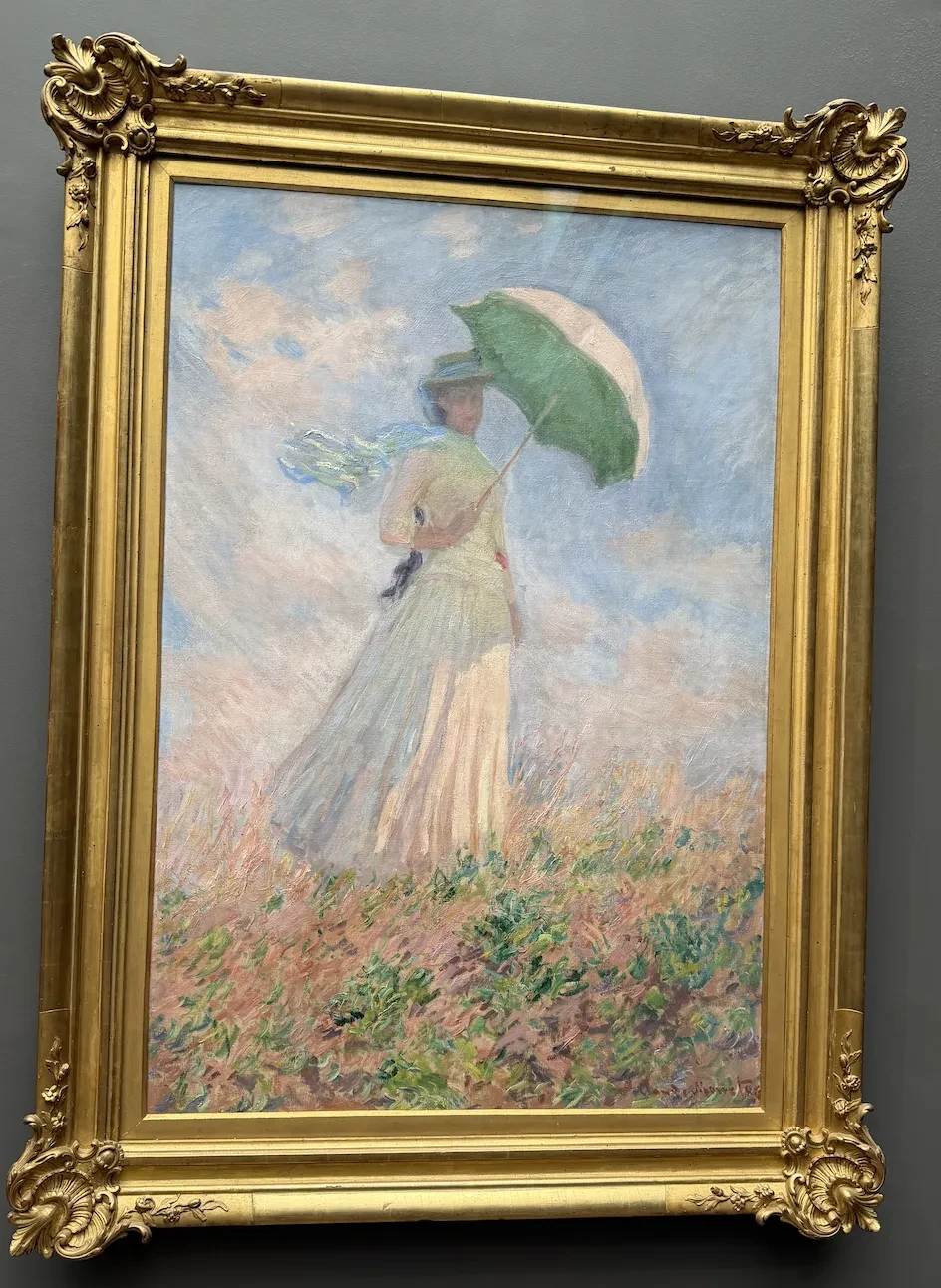
Study of a Figure Outdoors (Facing Right) · 10 October 2026 · Musée d’Orsay
A woman with a parasol faces left in one painting and right in the other, standing on a grassy slope against the sky. A slightly lower viewpoint makes the figure appear elongated. Her face is not the centre demanding careful identification; the eye rests more readily on the tilt of the parasol, the outline of the skirt and the rich shifts between warm and cool tones in pale fabric. Wind cannot be painted directly, but becomes perceptible through the movement of clothing. Air has no definite boundary either, yet the colours around the figure almost let us feel the weather.
Du Fu wrote: “In lengthening days, rivers and mountains are lovely; on the spring breeze, flowers and grasses are fragrant.” The spring breeze has no shape, yet connects plants, scents and the human body. The air in Monet’s paintings likewise appears through the things it touches. The subjects of these two works are similar, but looking again remains necessary. Once the body turns, the fall of light, the distribution of shadows and the balance of the composition must all be reorganised. A subject is not exhausted by being painted once. Before these figures, I also set aside, for a while, my interest in identifying them. They appeared first as people standing in wind and sunlight. How someone stands at this moment, how fabric lies against the body, proved enough to hold my gaze.
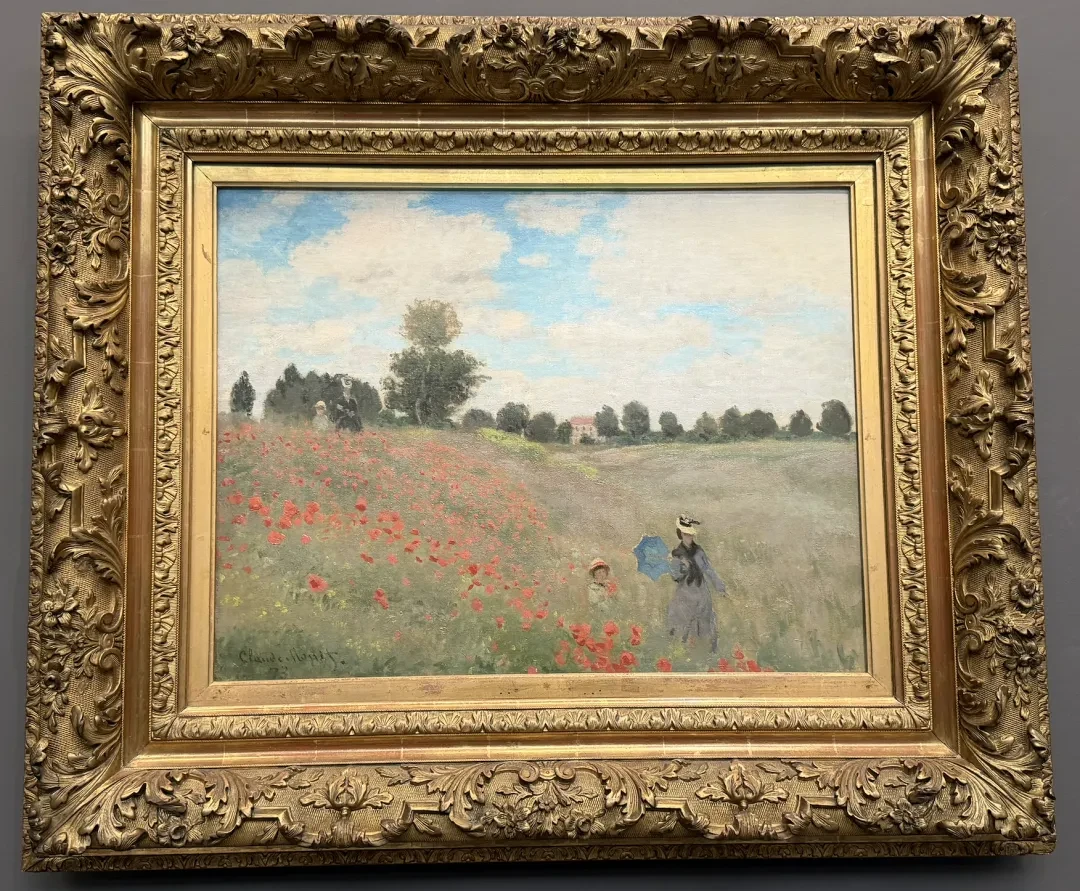
Poppies · 10 October 2026 · Musée d’Orsay
Before Poppies, the afternoon took on brighter colour. A green slope stretches forward, scattered with red flowers. The nearby reds are larger and more vivid, growing smaller in the distance. Figures move through the field, while trees connect earth and sky. Monet does not render each flower as a botanical specimen; instead, patches of colour form a rhythm together. Looking at the reds, I thought of Qin Guan’s small garden: “How small this garden, yet it gathers all of spring: peach blossoms red, plum blossoms white, rapeseed flowers yellow.”
A few ordinary plants present spring together in red, white and yellow. The earlier word “wandering” in the poem is especially apt. It gives looking a bodily rhythm: we may move with the scenery, let our gaze change direction, and need not hurry to arrive. Monet’s field gives me that freedom too. We are not asked to wait for a story’s climax. Flowers bloom, people pass, and air and colour have already given this moment weight.
We often name memories after events: graduation, promotion, signing a contract, winning an award… Events make time easier to narrate and compare. Days without a major event are often compressed into “I’ve been busy lately”. Yet most of life takes place precisely on those days. Du Fu wrote of “swallows flying over softened mud, mandarin ducks sleeping on warm sand”: moist earth, warm sand, flight and sleep together make a spring day. That afternoon need not first produce an achievement to deserve a place in writing. I gradually felt that fully experiencing an ordinary moment requires an ability of its own. We may be capable of arranging complicated itineraries, yet unable to spend half an hour quietly; able to handle many things, yet increasingly unable to notice how we are living.
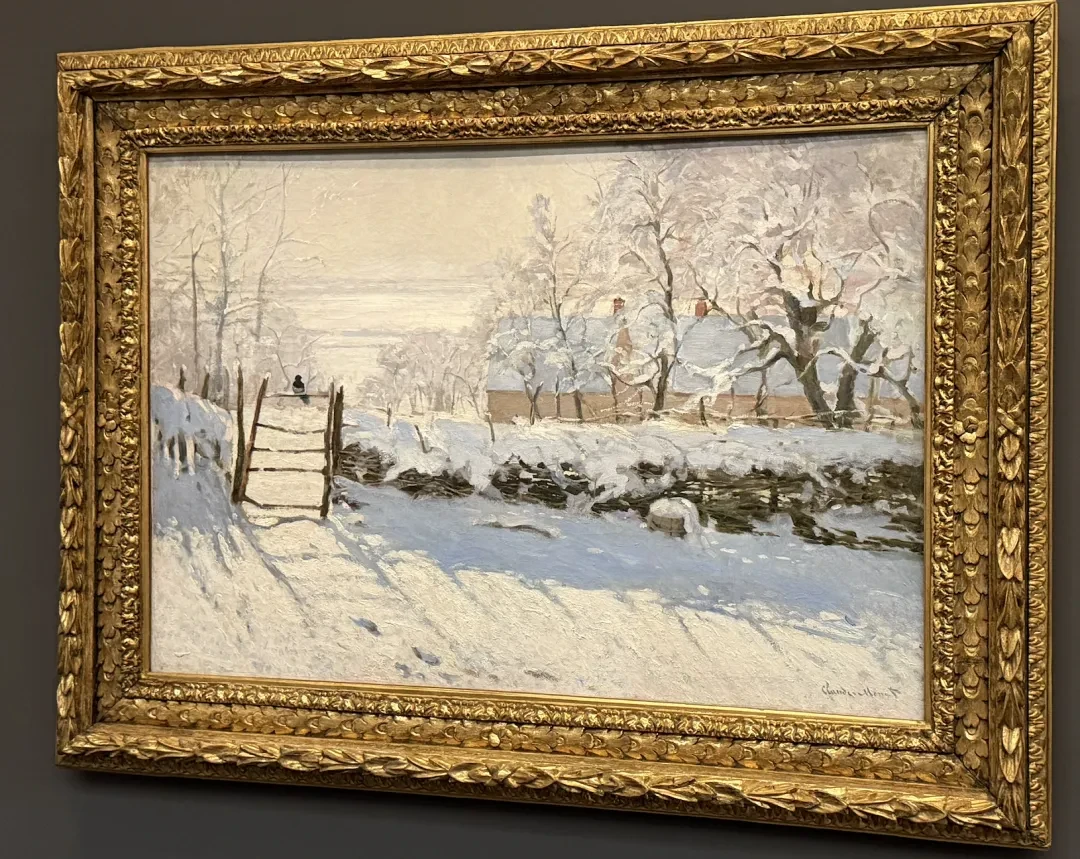
The Magpie · 10 October 2026 · Musée d’Orsay
The Magpie stopped me in a different kind of brightness. Snow covers the ground, rooftops and fences, yet the whites contain rich variations. Sunlit areas carry warmth, while shadows turn blue-grey. The fence casts a slanting shadow on the snow. A magpie perches on a wooden gate, its dark body small, yet gathering the gaze.
First I saw snow; only gradually did I see the differences within the white. Stillness, too, can be so rich, but its richness requires attention to settle. Wang Wei wrote: “At leisure, one notices cassia blossoms fall; the night is still, the spring hills empty.” One scene is a spring night, the other a winter day. They are different, but “at leisure” suggests the state needed to look at this painting. If we are always being drawn towards the next thing, we can scarcely notice life’s subtleties fully. Today we encounter a great deal of information, and our attention has been trained to switch rapidly. Before one message is finished, another alert appears. Things without intense stimulation can leave us bored. A few differences of colour in the snow, a bird pausing briefly, seem insufficient to hold us. Yet if we keep looking, the initially almost blank snow reveals relationships between light, temperature and space. The painting has not changed; what I can perceive has.
Following Han’s discussion of contemplation and lingering, I thought that attention needs room to delay a response. Before what is in front of us, we need not immediately decide whether it is useful or worth sharing, nor hurry away in search of fresh stimulation. Not everyone always has that room. Work schedules, financial pressure and caring responsibilities can make rest difficult. We cannot blame someone for not knowing how to live simply because they cannot quietly contemplate a painting. Yet we still need to ask: what arrangements give people a chance to recover their capacity to feel the world?
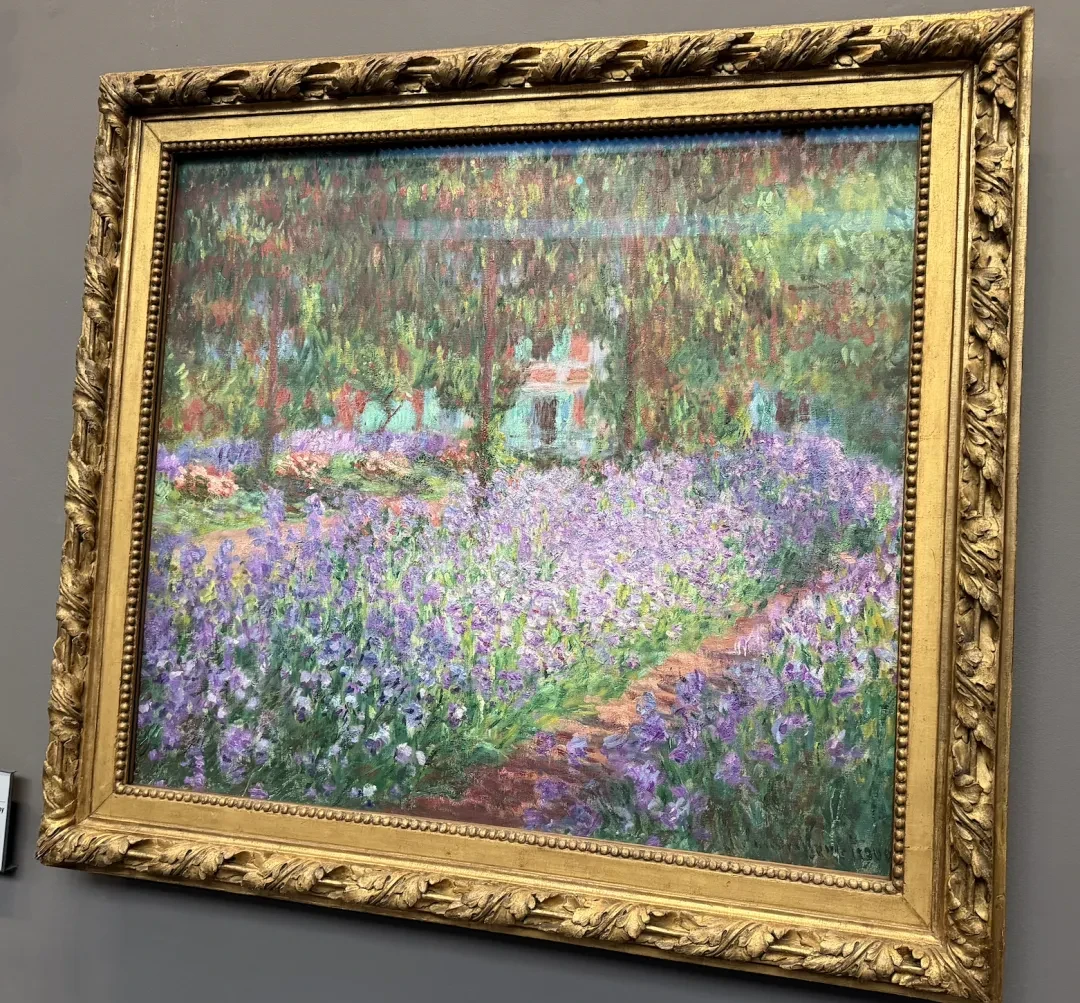
The Artist’s Garden at Giverny · 10 October 2026 · Musée d’Orsay
The Artist’s Garden at Giverny brought this question into the tending of everyday life. Purple irises open among green leaves; flowerbeds extend into the picture; tree trunks maintain spatial order, while small strokes fill that order with variation. Such abundance takes time to cultivate. Monet helped shape the garden and painted it repeatedly, allowing his living environment and creative work to nourish each other. I thought of Tao Yuanming: “Picking chrysanthemums by the eastern fence, at ease I see the southern mountain.” Picking flowers is a concrete activity; seeing the mountain happens naturally within it. Work and ease can inhabit the same time. Recovering our capacity to feel life does not require us to stop acting. Tending plants, awaiting the flowering season and noticing the weather may also settle our attention.
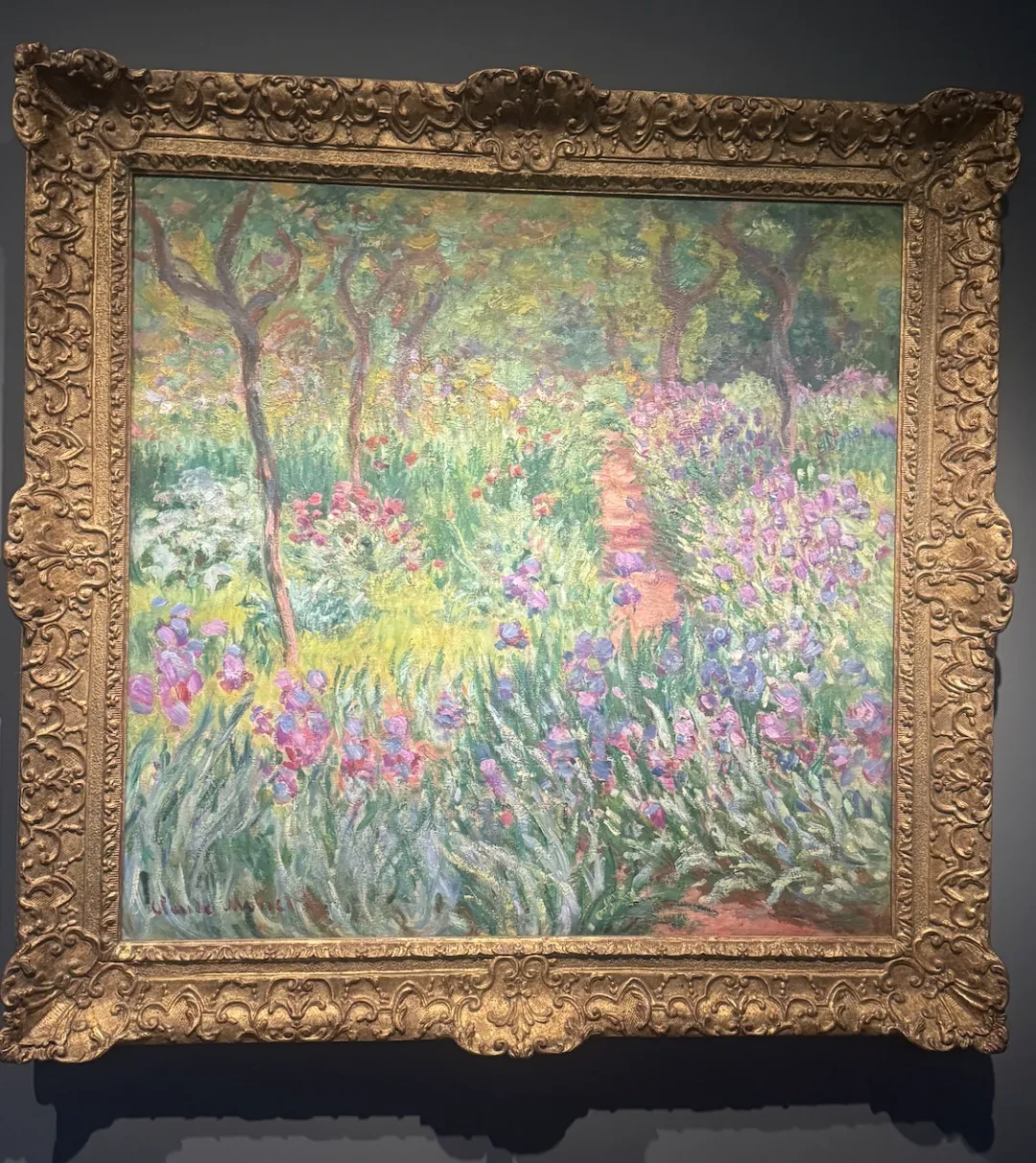
The Artist’s Garden at Giverny · 14 September 2025 · Yale University Art Gallery
This helped me understand more precisely my unease with a life measured by performance. Doing something attentively can establish a relationship between a person and a thing; constant self-assessment can instead make us care only whether we are performing well enough. Sometimes both attitudes inhabit the same action. A garden needs tending, but has rhythms of its own. We can water, prune and plan planting, yet cannot demand that flowers open to a work schedule. Care involves effort, but also waiting and limited control. Over the years I have repeatedly travelled far to find things worth seeing. Before this garden, I began to consider my own life: would I invest the same patience, look at it without assessing performance, and make everyday life itself a place worth returning to and continuing to discover?
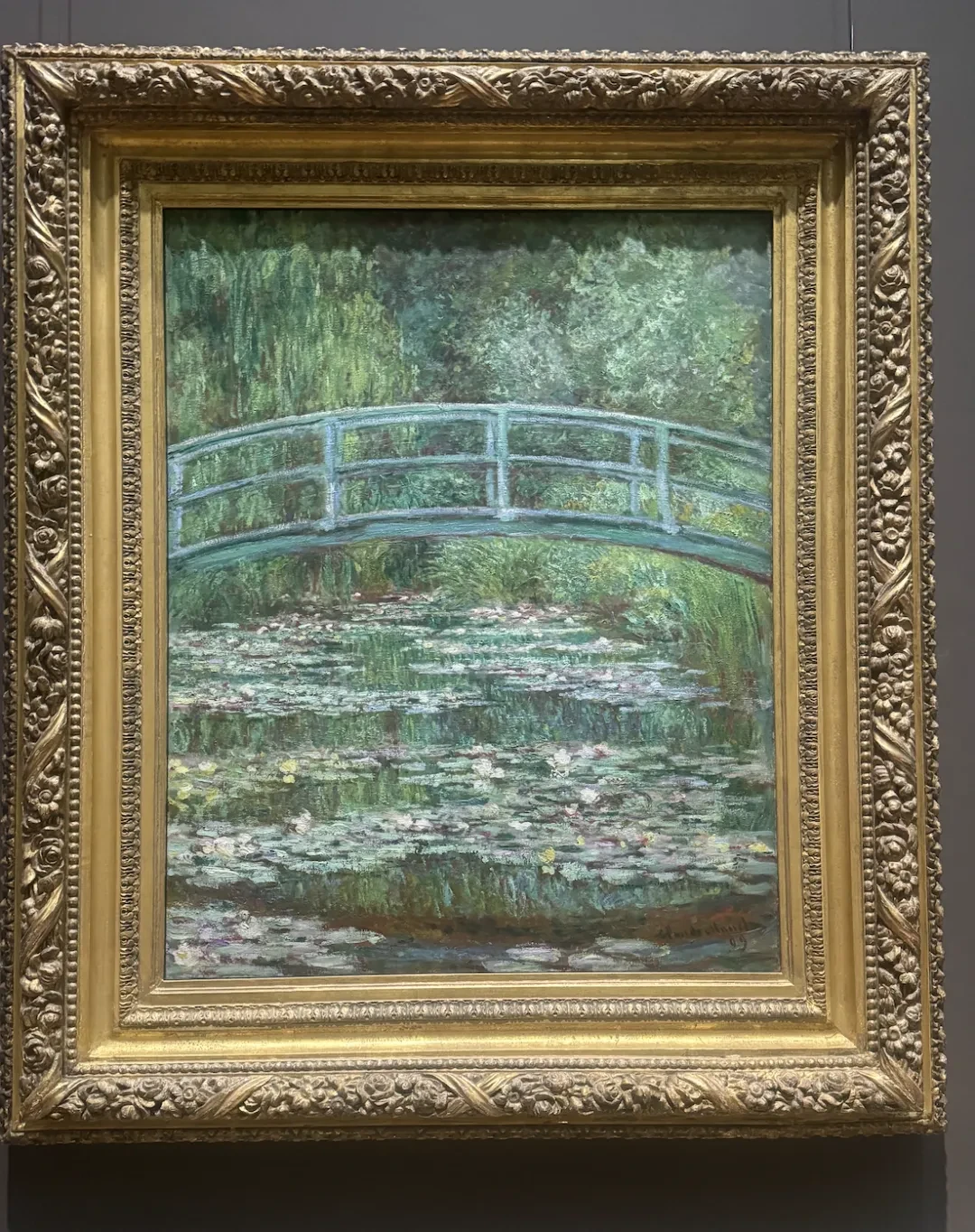
Bridge over a Pond of Water Lilies · 16 September 2025 · Metropolitan Museum of Art, New York
Thinking about “returning” reminded me of Monet’s Bridge over a Pond of Water Lilies, which I saw last year at the Metropolitan Museum of Art in New York. This, too, depicts his garden at Giverny: a Japanese bridge spans the pond, surrounded by dense plants. Reflections extend into the water; water lilies bring the eye back to its surface. The bridge provides structure, and the water transforms it. Plants on the bank grow upwards, reflections unfold downwards, and the eye continually adjusts between depth and surface, near and far.
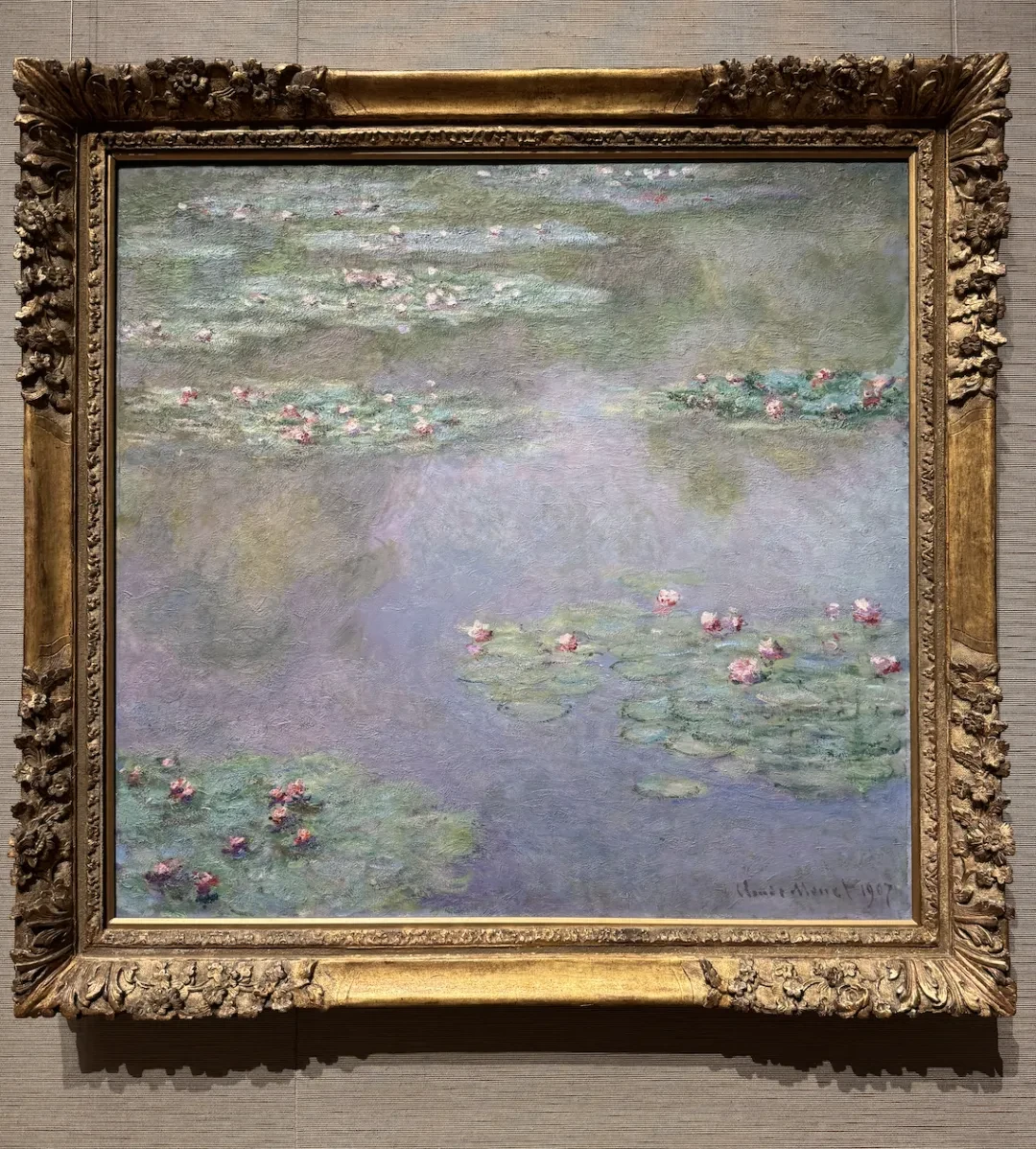
Water Lilies · 7 September 2025 · Museum of Fine Arts, Boston
I also remembered “Who Can Resist Monet’s Atmosphere?”, which I wrote in Boston last year. Beginning with lawyers’ know-how and know-why, it discussed questioning, reflection and the investigation of underlying principles. At the time, I felt that Monet’s haziness contained an approach to truth. Thinking again today, reality does not always appear with clear boundaries or in immediately recognisable form. Reflections in water really are blurred; air really does alter colour. These belong to the world we inhabit. Drawing clear outlines does not necessarily say everything about what is before us; allowing edges to loosen may preserve a more delicate experience.
“Here lies a true meaning; as I try to explain it, words have already slipped away.” We can analyse Monet’s compositions, identify his brushwork and learn the context, yet still feel that some impressions require more time. Their being hard to express does not mean they have not happened. We readily treat expression as proof that an experience is complete: we must summarise what we read and explain what travel has given us. If we cannot, we wonder whether we gained anything at all. Some experiences need longer. They may return on an ordinary afternoon: seeing trees reflected in water, we suddenly recall a painting and understand a little more of what moved us then. In The Scent of Time, Han emphasises learning to linger again and restoring a contemplative life. This makes me wonder how, across time, we can retain our capacity to feel beauty—or our sensitivity to “being” itself.
Grainstack (Sunset) · 7 September 2025 · Museum of Fine Arts, Boston (Photograph absent from the supplied PDF.)
At the Musée d’Orsay, Boston’s Grainstack (Sunset) returned to memory. The stack I had photographed also revealed a particular moment through evening light and shadow. Feelings from last year gained a new interpretation through today’s looking; today’s understanding grew richer through last year’s memories. Perhaps the meaning of travel gradually forms through these connections. Place names are no longer merely side by side, and experiences no longer isolated. We look at the present with the past, then rediscover the past in the present. Rather than saying Monet freezes time, I would say he preserves our ability to perceive change. The image is still, yet we sense that this light will not last forever.
Chinese poetry also often makes time visible through change. Su Shi describes a sudden shower: “Black clouds spill like ink before veiling the hills; white rain leaps like pearls into the boat. A wind sweeps the ground and suddenly scatters them; below Lakeview Pavilion, water stretches like the sky.” Clouds, rain, wind and the newly open lake successively transform the world before us. When Li Qingzhao says, “Surely the green has grown lush and the red grown thin,” time, working through wind and rain, has already changed the balance of leaves and flowers.
A moment has meaning partly because it is passing. This gives me a new understanding of “cherishing”. We cannot ask a particular light to stay on a dress forever, keep a field of flowers permanently the same colour, or preserve love’s first shy freshness unchanged… What we can do is pay attention when it appears, take it seriously, and, after it passes, let that encounter continue to participate in our lives.
In “Magnolia Hollow”, Wang Wei writes: “By the ravine, all is still and no one is there; the blossoms open and fall in profusion.” Flowers in the mountains bloom and fall without an audience; that does not prevent them from doing so. Starting from this poem today, I think about the relationship between recognition and value. This association belongs to my present self, yet lets me step briefly away from the anxiety of seeking attention and response. In a world of constant recording, display and evaluation, forgetting whether one is being judged is itself a rare experience.
As a family lawyer serving many wealthy yet anxious clients, I have gradually realised that wealth can be preserved, risks managed as far as possible, and opportunities created. But to eat a meal unhurriedly, hear out the person beside us or feel an afternoon’s weather, we must still enter life ourselves. We make arrangements for the future, but need to leave space for the present too. If time with family is always postponed by the promise that things will be better later, it may slip away unnoticed. How much a family possesses and how much its members experience are not the same question.
Monet’s garden made me think that tending a relationship requires similar patience: investment, attention to change, and acceptance that another life has rhythms of its own. Many important things cannot be completed by a single efficient arrangement; they emerge gradually through repeatedly spending time together.
A glass of Chablis beneath the Eiffel Tower · 9 October 2026 (Photograph absent from the supplied PDF.)
Writing this, I realise that the essays in my “Mingyue’s Journeys” WeChat collection may themselves create performance pressure around recording life: a visit must yield an essay, the essay must contain ideas, and the ideas must prove the trip’s value. Clearly, I am not outside this habit. Yet for me, writing matters more as a way of looking back: allowing paintings at the Musée d’Orsay to meet memories of Boston, letting Chinese poetry help me recognise feelings, and using philosophy to ask questions I have not yet fully considered. It can extend experience without rushing to close it.
So I am willing to leave this encounter a little unfinished. Some things I like have no explanation yet; some feelings still need time. Photographs preserve how a scene looks, words preserve what I understand now, and life ahead may still alter both. The Louvre made me ask what a finite life can leave behind. The Musée d’Orsay led me further, to ask how a finite life can be lived attentively. Garden light falls on dresses; figures beneath parasols feel the wind. People cross a poppy field; a magpie pauses in the snow. Giverny’s flowers grow to their own rhythm, and a pond receives reflections of a bridge and the sky. They have not stopped time, but have let me feel it again.
Back in everyday life, I hope to keep this attention: to do carefully what needs doing, while leaving some room for the people beside me, the things before me, and feelings not yet fully expressed.
Some gains become knowledge; others slowly change the way a person sees the world.
Here lies a true meaning; as I try to explain it, words have already slipped away.
Luncheon on the Grass · 10 October 2026 · Musée d’Orsay (Photograph absent from the supplied PDF.)