English translation of the original personal essay; historical observations, figures and legal discussion reflect its publication date. Some photographs were not embedded in the supplied PDF; available images and the original captions are retained.
I caught a lift with a professor from New Haven to Boston for the weekend and stayed at a hotel in Fenway–Kenmore. Beside small-town New Haven, Boston felt like a bustling metropolis.
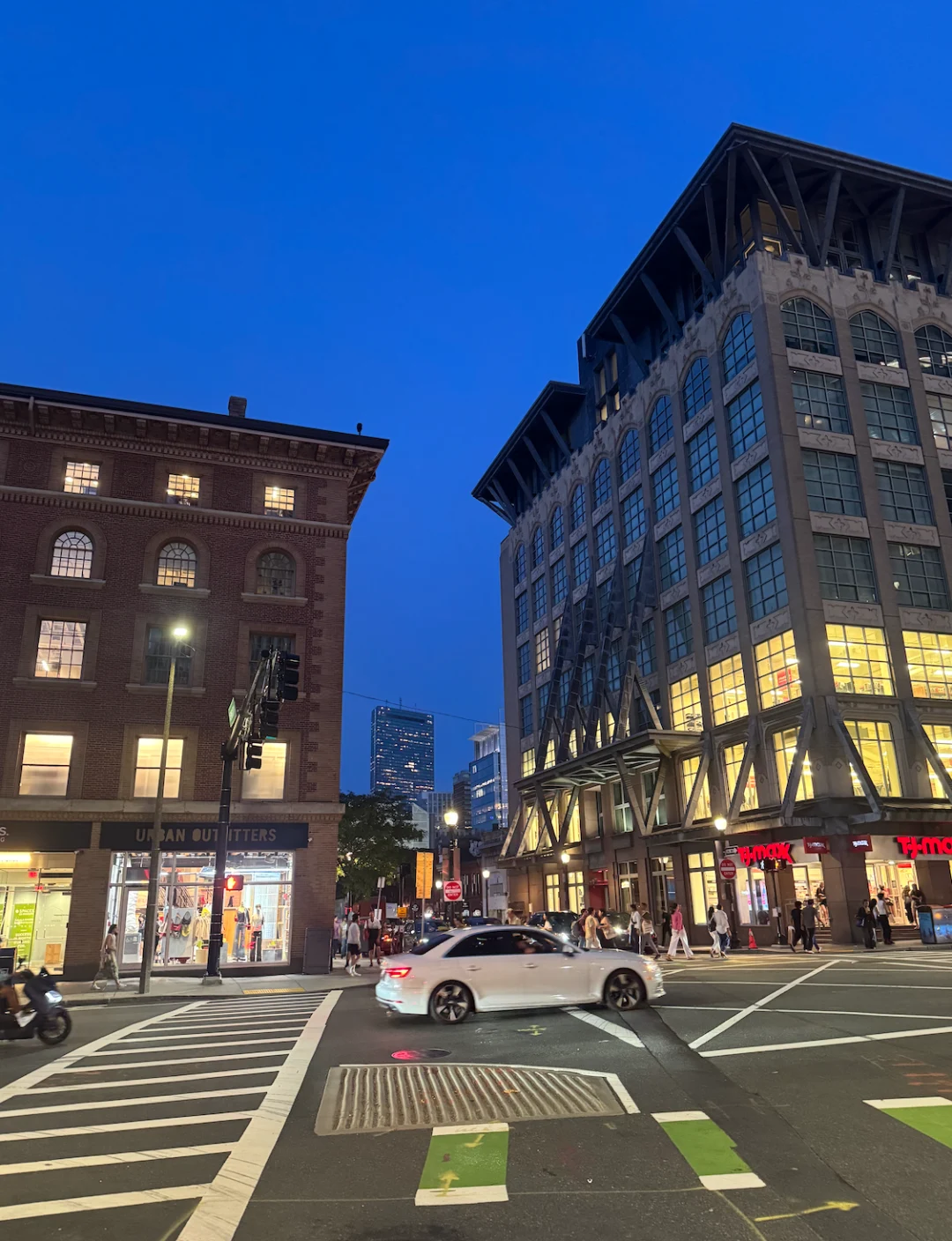
That evening I picked a restaurant at random, ordered halibut as my main course and paired it with a glass of Sauvignon Blanc. What a pleasure! Suddenly, someone at the next table greeted me in Chinese and asked me to take a photograph. It turned out they were Fudan EMBA students attending classes at MIT. The old saying celebrates meeting a friend far from home; here I was meeting fellow alumni in a little restaurant abroad. We promptly exchanged WeChat contacts. A happy encounter indeed!
On Saturday I walked through the city to the Museum of Fine Arts, stopping at Whole Foods for a slice of pizza and a can of soda—a makeshift lunch. Most shoppers I saw were white, smartly dressed, smiling as they pushed their carts and chose their groceries. Everything looked so comfortably settled that I wondered whether I had wandered into an affluent neighbourhood.

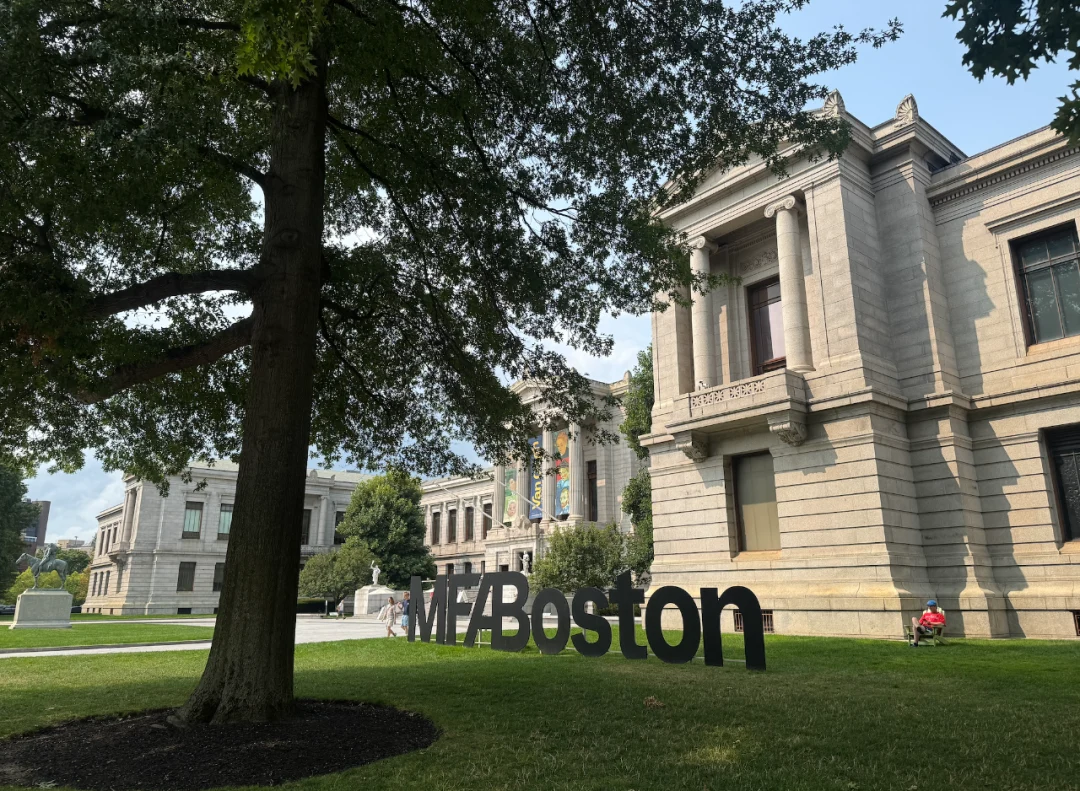
There was a long queue at the museum, again mostly white visitors. The Asian visitors, myself included, mostly seemed to have booked online in advance—the ticket was $27—and entered conveniently by scanning a QR code. On this East Coast visit, I found white Americans rather attached to familiar ways and cautious about technology. Most cars were petrol-powered; Teslas were rare. In China, a phone with WeChat is enough for dining, shopping and going out; there is no need for a wallet or bank cards. In America, a credit card is essential, and some cash is advisable. Back home, surveillance seems to cover every angle: say the wrong thing in a WeChat group and someone may immediately come to arrest you. In America, cameras are seldom visible on streets or in buildings. If your wallet is stolen, you are unlikely to recover it; without high technology, catching offenders is much harder for the police.
The Museum of Fine Arts holds many treasures, including remarkable Chinese objects that have ended up overseas. The variety and quality in the Asian galleries on the second floor were astonishing—almost a miniature Palace Museum. A Song-dynasty art exhibition was on during my visit: Song and Yuan paintings, stone sculptures and ceramics, in all their splendour.
One piece of Ru ware deserves particular mention. It was not in the most prominent position, yet seemed to have a mysterious power to draw visitors’ eyes.
This Northern Song bowl stand, dating from the late eleventh to early twelfth century, has a sky-blue glaze—my apologies that my iPhone made it look a little pale—and five spur marks underneath. Ru ware is among the rarest and most celebrated Chinese ceramics; I have heard that fewer than a hundred pieces survive. Its glaze is prized for its lustre and texture, embodying the Song aesthetic of restraint, understatement, colour and purity. As with other Ru pieces, its beauty lies in the union of a thin body, grey clay and a thick, almost translucent sky-blue glaze. As the vessel cools after firing, the glaze often contracts more than the body, creating its distinctive crackle. Song connoisseurs and philosophers deeply appreciated this “imperfection” and especially treasured the crackled surface.
I opened the WeChat Moments I had posted on visiting the Palace Museum four years earlier and compared the pieces. Each has its merits, but the Boston example has a purer colour and finer crackle. I have heard there is also a uniformly coloured, uncrackled Ru piece in the National Palace Museum in Taipei. Has anyone seen it?
End.