English translation of the original personal essay, first published on 19 October 2026.
The same question can receive completely opposite answers in different countries. Only by going out and looking around do we discover where we stand.
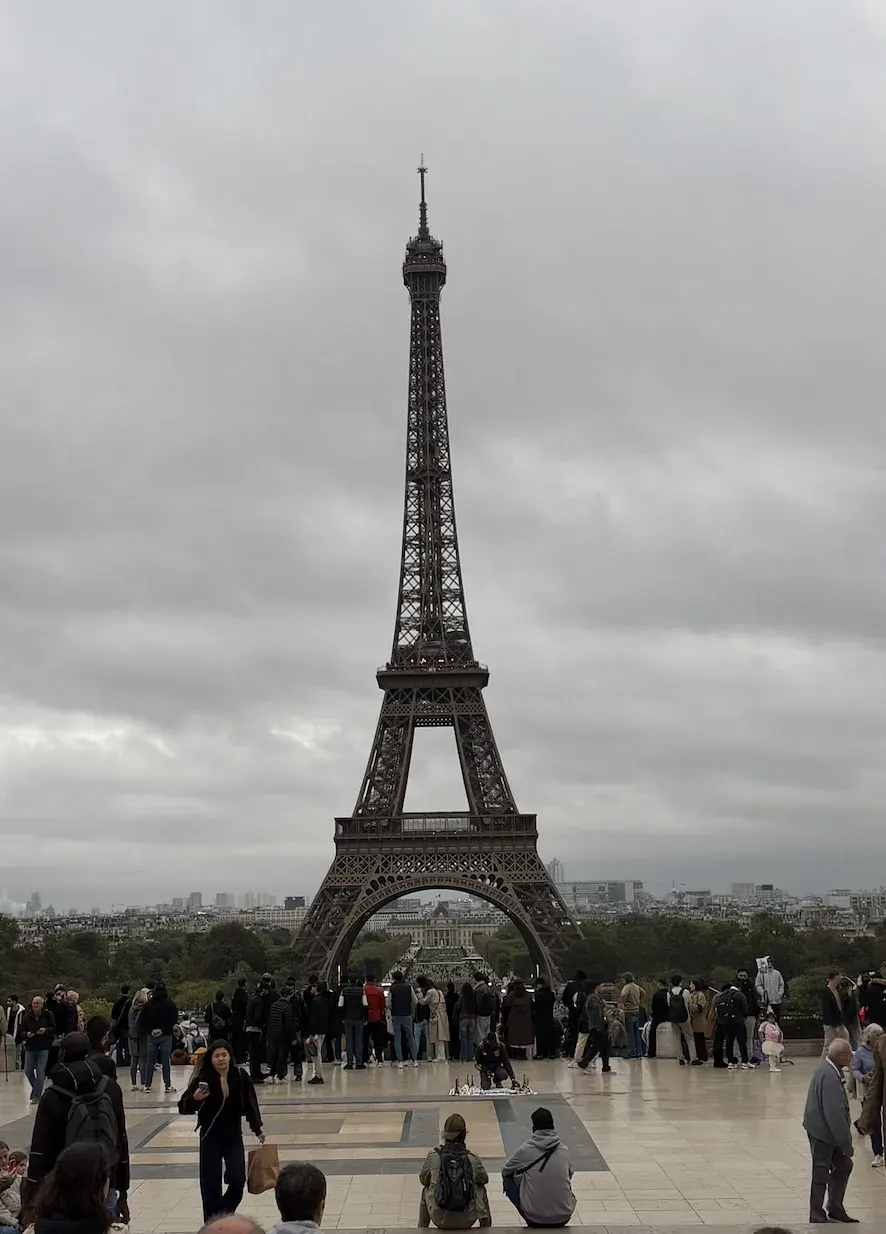
01 / VISA · Visas
Before I went to Yale as a visiting scholar last year, friends warned me about frequent shootings in America and urged me to stay safe. Before this trip to Paris, they said the city was in the midst of a revolution, and wherever there was no revolution, pickpockets were everywhere. In short, these old capitalist countries were apparently all in chaos. Yet getting into them was anything but easy: visas had to be arranged in advance, piles of documents submitted and long queues endured. I envied my fellow lawyers abroad, who seemed to fly around the world without ever having to apply for a visa.
Whatever country a lawyer comes from, there is one thing we tend to agree on: an overseas conference is a good opportunity to travel. Law is work; travel is life; and work is meant to make life better. Coming to Paris for a conference therefore offered a chance to explore. A conference also greatly reduces the guilt that comes from suddenly stepping outside a relentlessly competitive working environment. Work at full tilt for ten months, then spend two months wandering: a rhythm of effort and ease is one way to live. I am already hoping that the next IAFL meeting will be in Greece or Italy, so I can trace civilisation back to its beginnings.
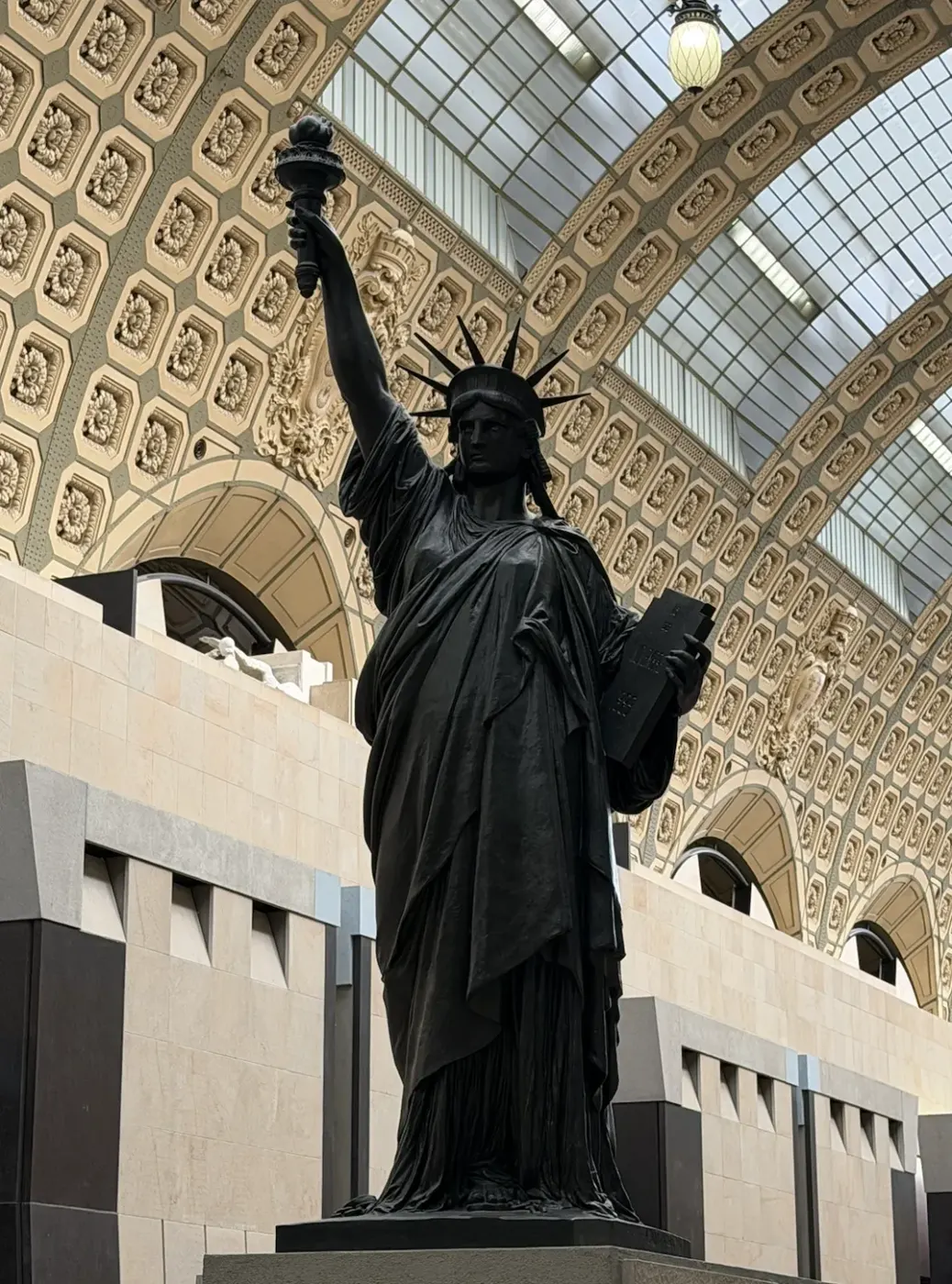
At the Musée d’Orsay, I unexpectedly came across a small Statue of Liberty. Created by Bartholdi, it shares its origins with the giant in New York Harbour. The “Liberty” that lights the New World, it turns out, has its hometown in Paris.
02 / SWITCH · Switching Modes
When fellow lawyers in China ask me for travel tips, my advice is to be ready to “switch modes”. The first switch concerns your phone and apps. The supposedly “far-ahead” phones do not work especially well abroad, so I still find an iPhone useful: downloading and using apps is straightforward. Book flights early to save money, and buy an overseas roaming data package in advance. But remember that roaming traffic may ultimately be routed back through China: you can be abroad while your internet remains behind the firewall, which rather defeats the purpose. My solution was to buy a short-term local eSIM ahead of time. For this trip, I bought a European eSIM online and downloaded NOMAD, with up to 20 GB over 30 days. It was fast, worked across Europe and spared me concerns about the firewall.
The most obvious switch is language. It does not happen overnight, and the pleasure lies in the process. In France, if you persist in speaking French, beginning with Bonjour, Merci, Bonsoir and C’est délicieux, you receive plenty of compliments, which is wonderfully encouraging. With colleagues, of course, we still use English. If you are willing to speak, do not worry that people will fail to understand; French people may not speak English any better than I do. People are fairly forgiving towards family lawyers from mainland China, especially about language. Language needs practice, just like driving: however much theory you learn from books, nothing beats getting behind the wheel and becoming steadily more confident. In my experience, when people stop complimenting your English, you have probably reached a basic level of competence.
The deepest switch is in our appreciation of diversity. At home, variety can feel scarce. Most lawyers, for example, are exhausted: physically tired when they have cases, mentally worn down by anxiety when they do not. Everyone rushes around competing, yet lives in much the same way. As Russell put it, “Diversity is essential to happiness.” At international conferences, family lawyers from jurisdictions around the world bring strikingly different ideas and ways of reasoning. We habitually speak of “Europe and America”, but the United States has fifty states, with different laws on marriage, family, succession and trusts. In Europe, too, the law of the United Kingdom differs from that of many EU countries. A Swiss lawyer’s account of succession practice can leave British colleagues listening in astonishment.
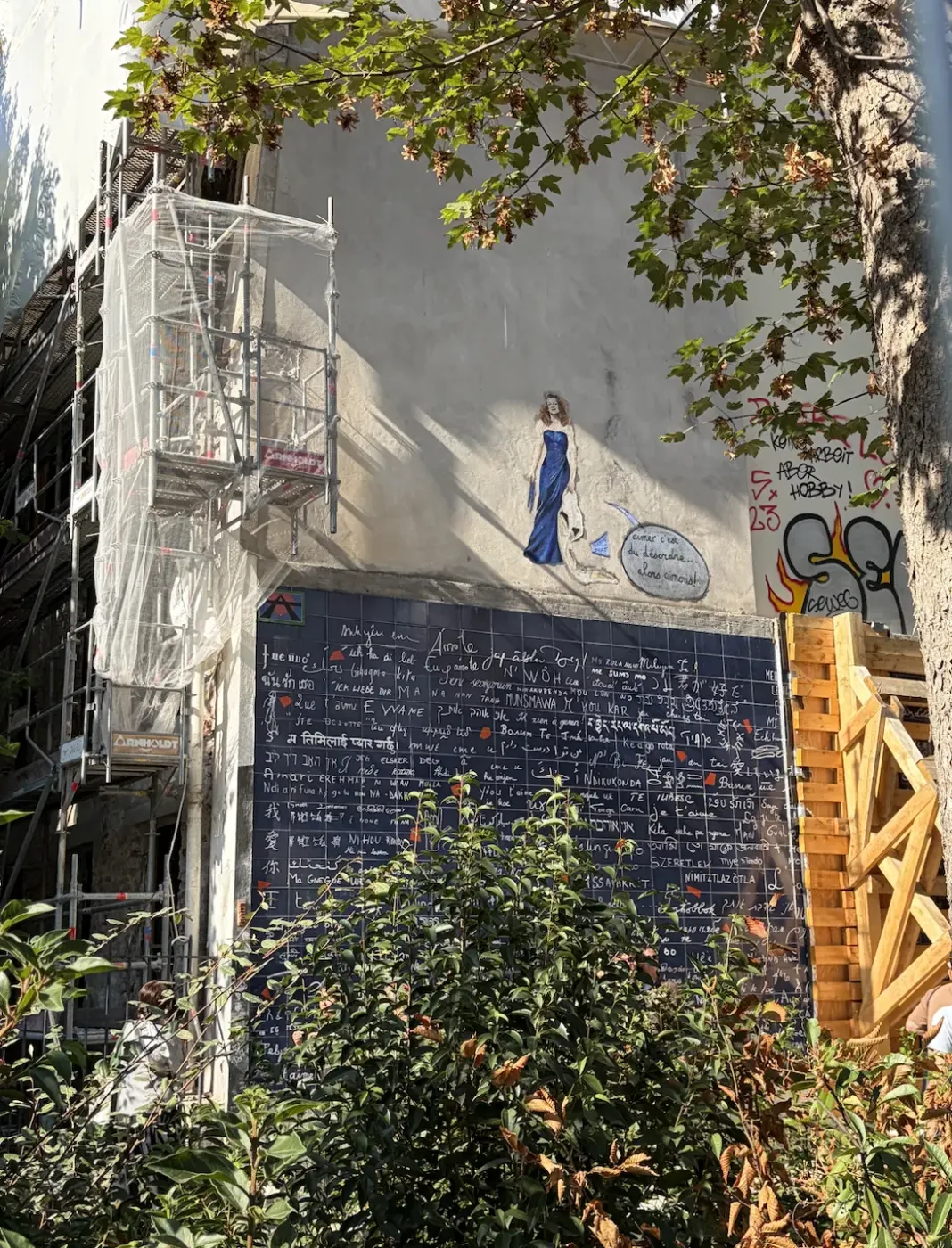
Deep in the lanes of Montmartre stands a dark blue wall, densely covered in white writing. More than two hundred languages say the same thing: “I love you.” Finding the familiar three Chinese characters in a corner warmed my heart. The scattered red fragments represent a broken heart. They say that if people love one another, it will eventually come together again. Above the wall, a woman in a blue dress seems to whisper: “Love is chaos, so go and love.” In Paris, even a wall talks about love.
03 / WALK · Walking
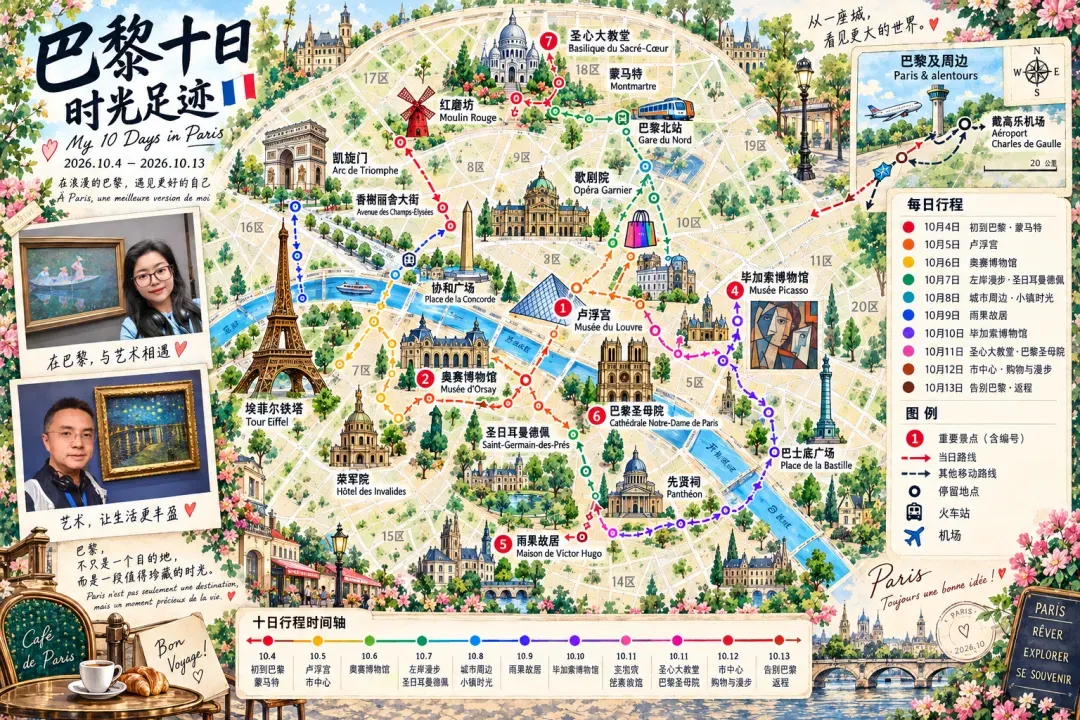
During our ten days in Paris, we mostly explored on foot. Switch on Timeline in Google Maps to record each day’s route, then ask GPT to draw a map at the end of the trip, and you have a record of your Paris footsteps. I used to research walks on Douyin and Xiaohongshu; now I no longer need to. On this journey through civil-law countries, France and Portugal, my most useful assistant was Muse, an AI from Meta. With location access and a Google Maps connection, it felt like a powerful combination of Amap, Dianping and Xiaohongshu. It helped me shortlist and book restaurants, museum tickets and even the flight from Paris to Lisbon. For work, I still prefer Claude, which in my view has overtaken GPT in several respects, though Chinese users can easily find their accounts blocked. We should embrace the advantages AI offers over doing everything manually, but people must still review and make the final decisions: when something goes wrong, a real person remains responsible.

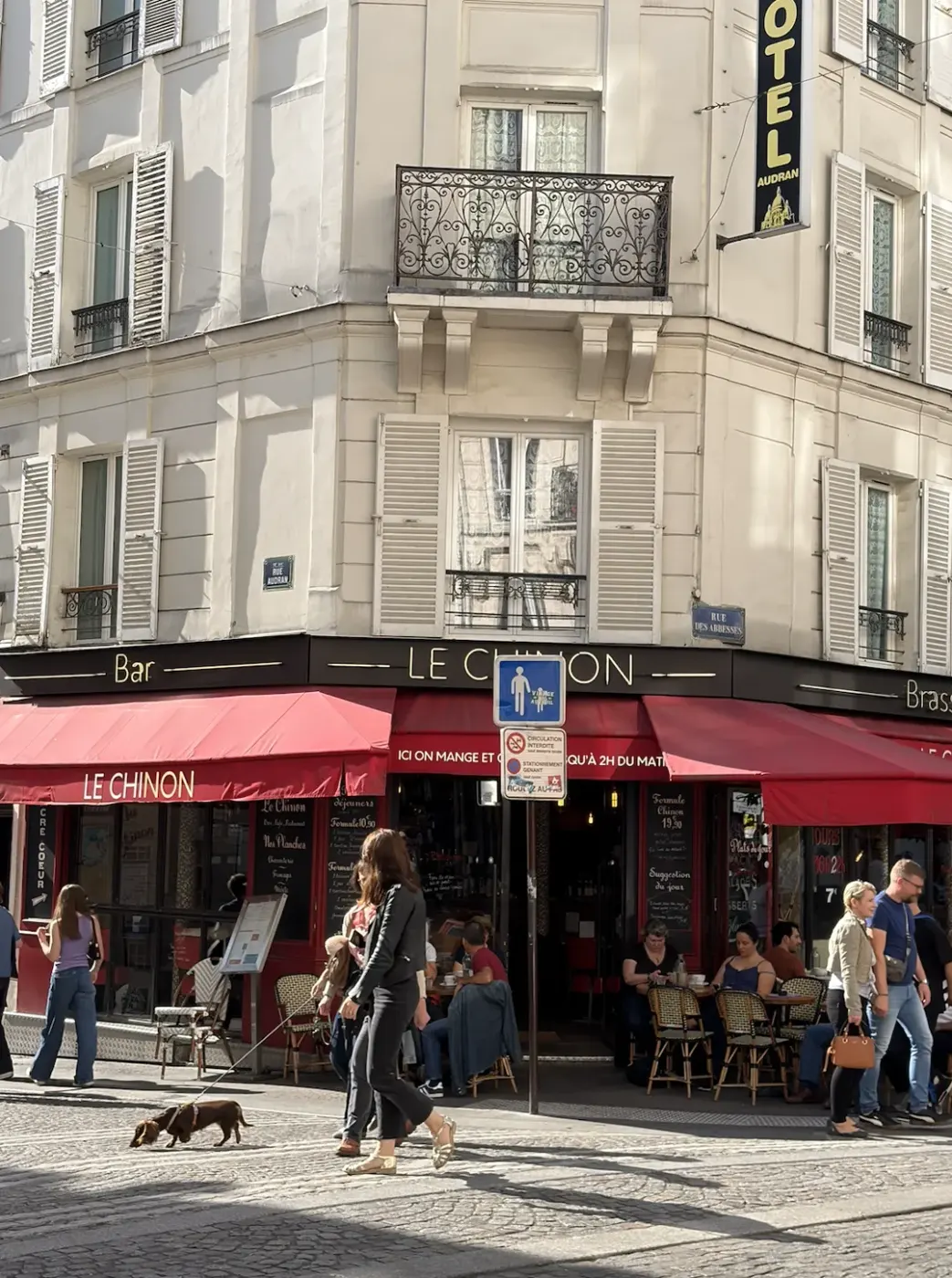
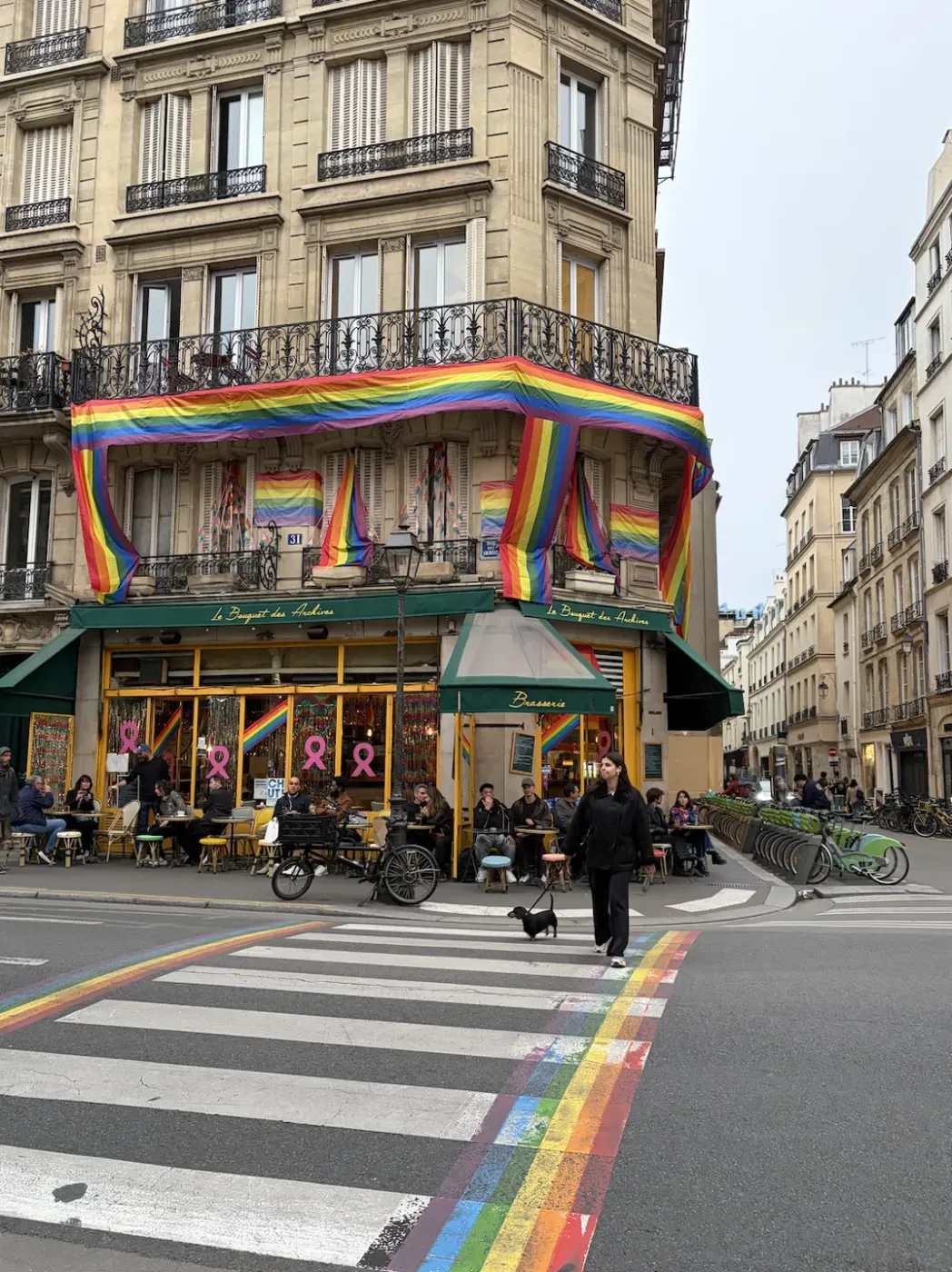
For everyday outings, bring a little cash in euros, but not too much; apart from tips, banknotes are seldom needed. Apple Pay covers shopping, Uber rides and the Métro. Getting around Paris with just a phone is generally quite manageable. We mainly walked, which allowed us to see ordinary Parisian life. One delight was the carefully presented corner cafés. The best seats were outside: a small round table, two little chairs and, invariably, a view of the street. French elegance, leisure and contentment were written on the faces of the customers for passers-by to admire. The passers-by were not to be outdone: stylishly dressed, they often had a dog in tow.
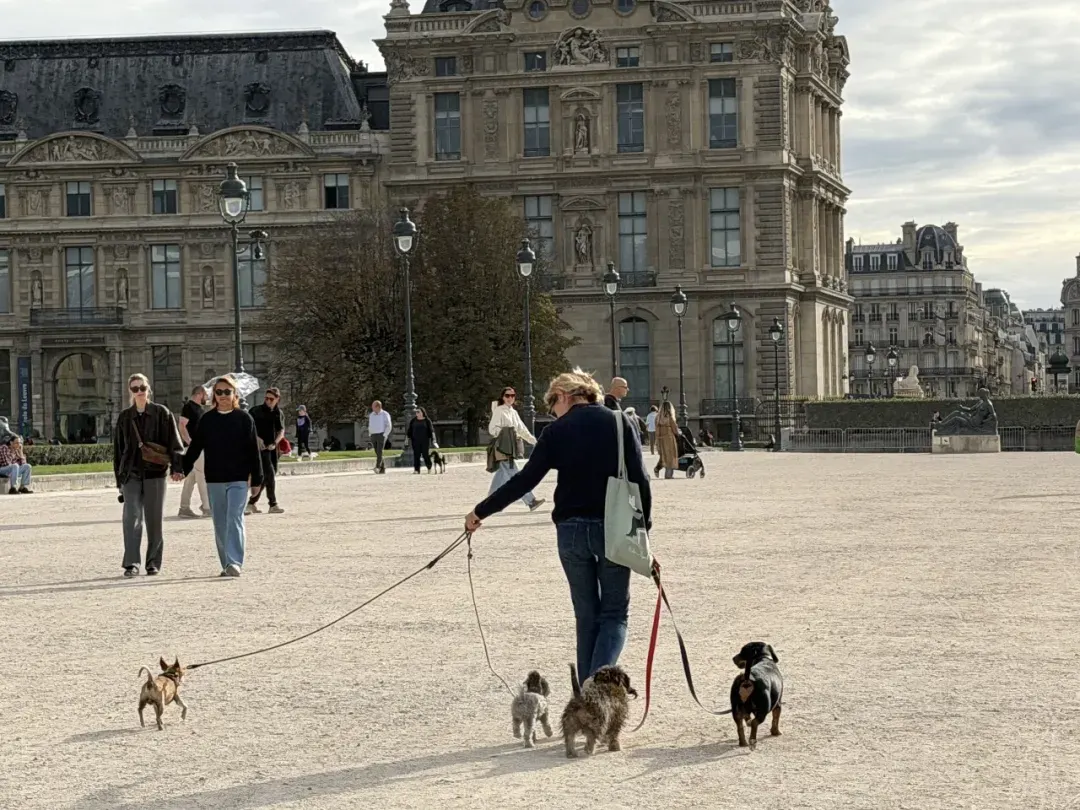
One afternoon in the Tuileries Garden, a blonde woman strolled past the Louvre with four little dogs: a Chihuahua with enormous upright ears, a curly-haired toy poodle and two long-bodied, short-legged dachshunds, one shaggy and one sleek and black. Four leads crossed, each dog heading in a different direction, yet she remained perfectly composed. In Paris, even walking the dogs looks like a street fashion show.
04 / LEFT BANK · God, Coffee and Existence
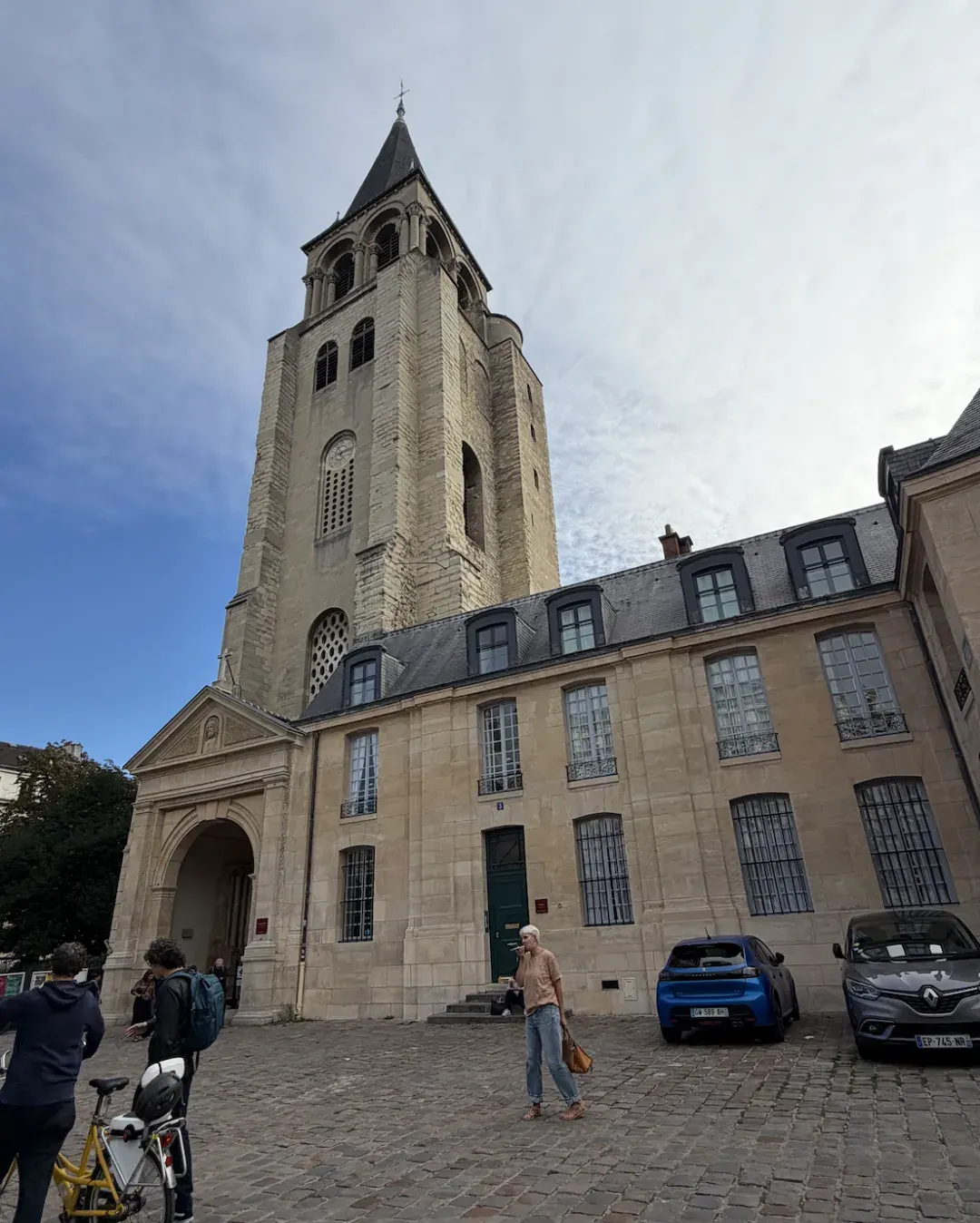
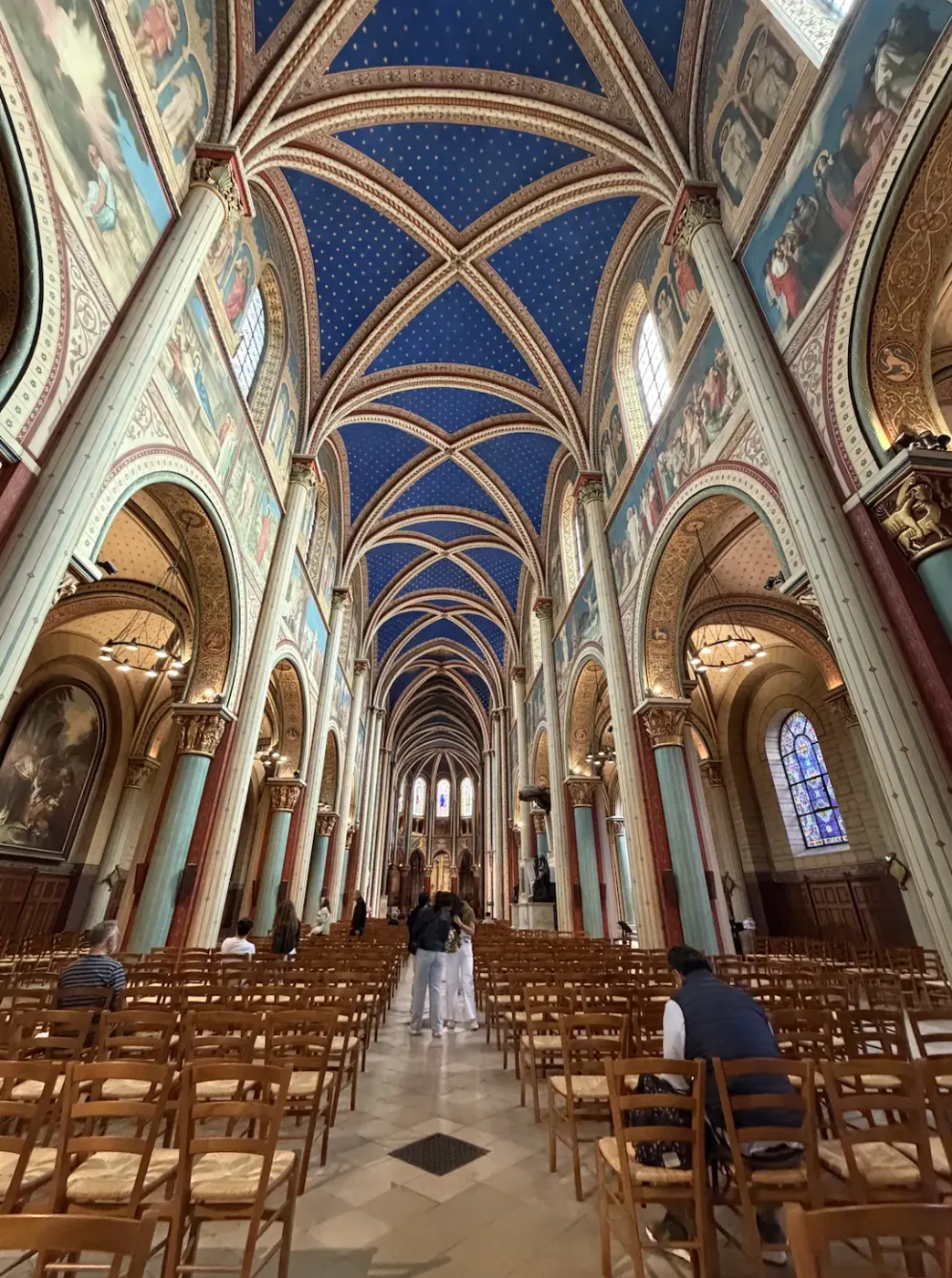
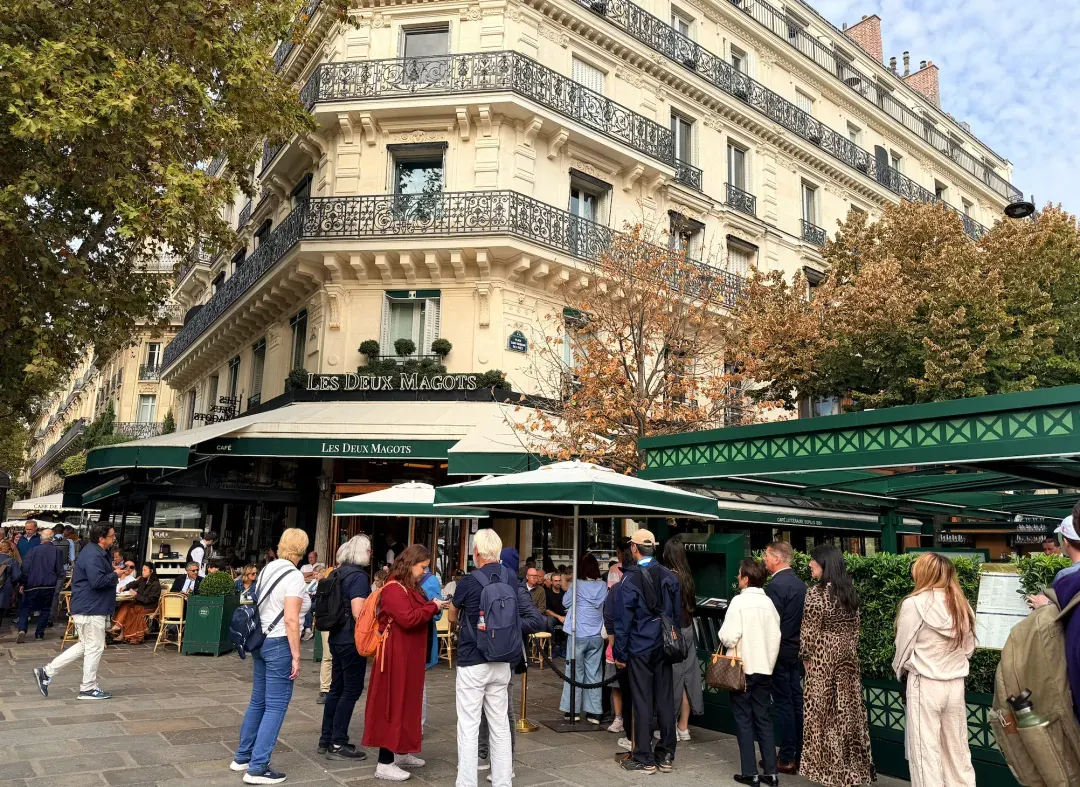
Leave the Church of Saint-Germain-des-Prés, cross the road and you reach Les Deux Magots; a few steps further is Café de Flore. Paris has a curious sense of urban planning: God and coffee are separated by just one road.
The church began as a sixth-century abbey, and its Romanesque bell tower has stood for a thousand years. In the Middle Ages, these were meadows outside the city, where monks copied manuscripts and studied. More than a millennium later, atheists sat in cafés on the same ground discussing why human beings live. On the Left Bank, the journey from faith to doubt takes only a single crossroads.
Les Deux Magots takes its name from two Chinese porcelain figures inside, making it almost a compatriot of mine. Rimbaud, Verlaine and Hemingway all sat here. Café de Flore was Sartre and Beauvoir’s “office”. During the wartime occupation, coal was scarce and homes were cold, but Flore had a stove. The two went upstairs to write every day, staying for hours. Existentialism therefore owes at least a little to a heater. Today, Flore is packed, everyone holding a phone to photograph the coffee, the sign or themselves. I was no exception. One coffee costs enough to buy several back home, but thinking of it as a ticket to share a frame with Sartre made the price easier to accept.
When I studied existentialism, Sartre’s phrase “existence precedes essence” made the deepest impression: people have no predetermined meaning; our choices define us. Beauvoir applied this idea to women in The Second Sex: one is not born, but rather becomes, a woman. More than seventy years later, it still feels relevant.
As a family lawyer, I am especially curious about their relationship. In 1929 they made a “two-year pact”: each was the other’s essential love, while contingent loves were allowed; no marriage, no concealment. The arrangement was renewed for fifty years, and they were eventually buried together in Montparnasse Cemetery. I have handled many prenuptial agreements with watertight clauses that nevertheless ended in a mess. Their agreement, never even committed to paper, was honoured more thoroughly. The force of a pact, it seems, lies not on paper but in people’s hearts.
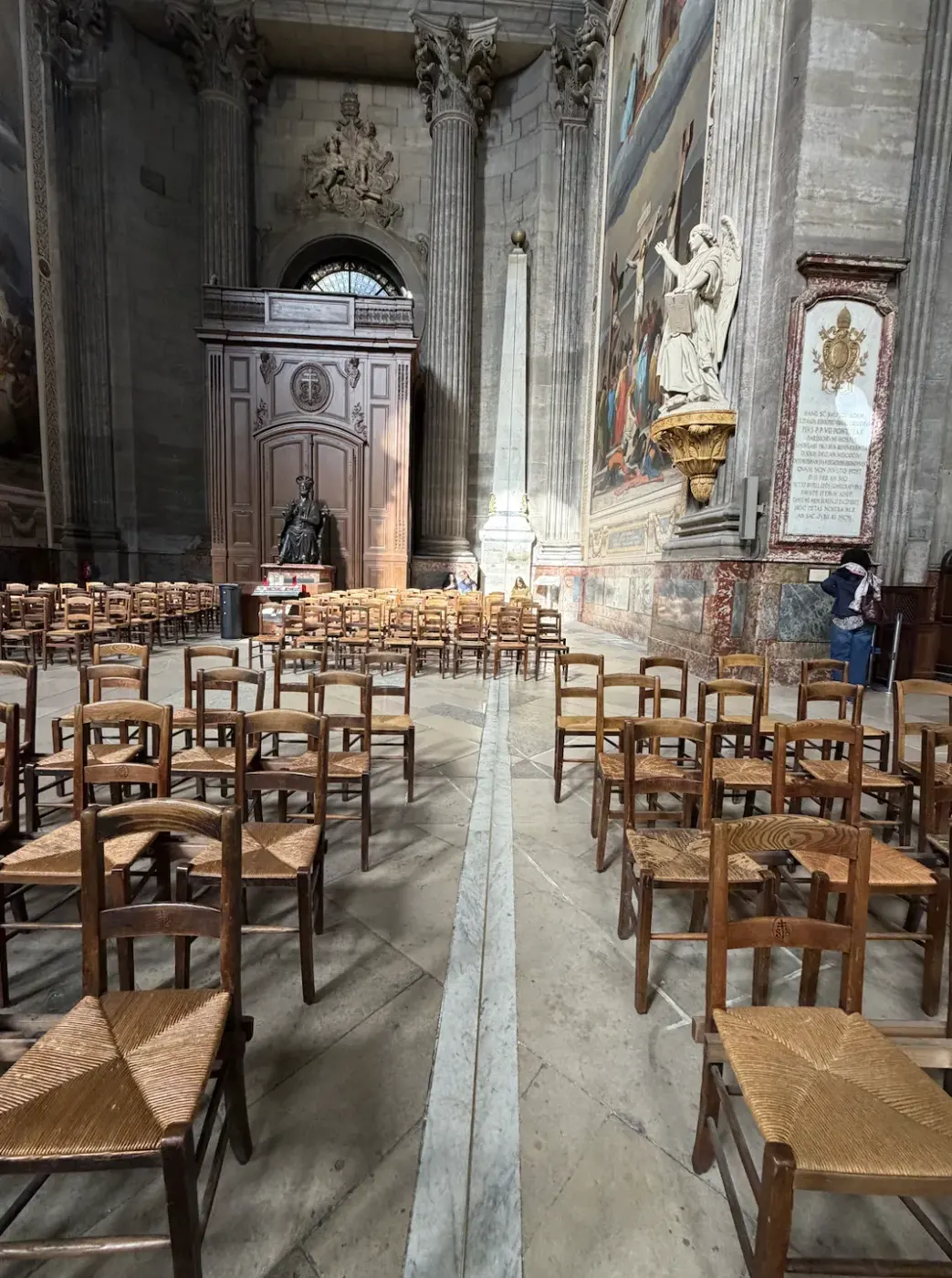
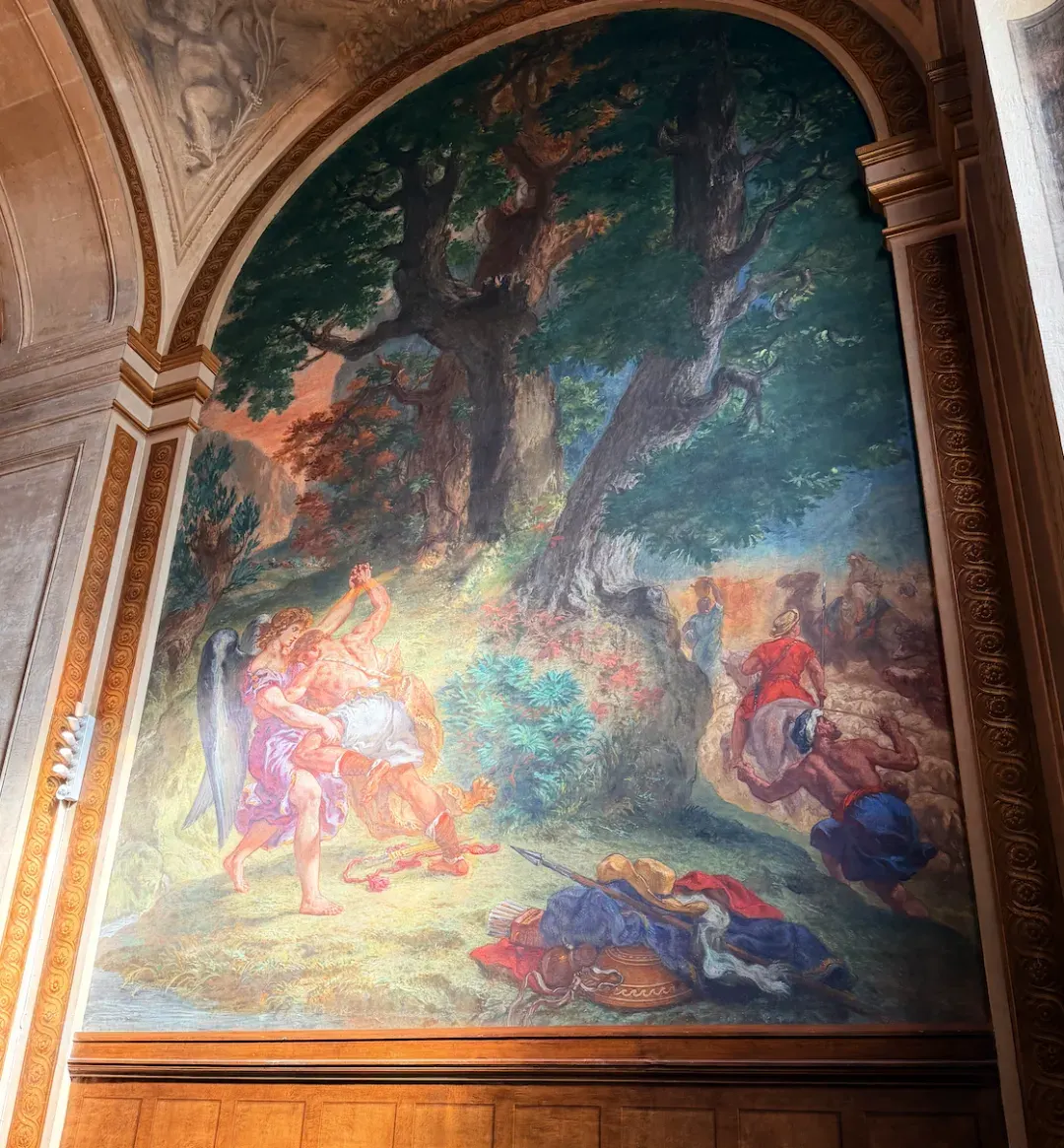
A few minutes south is Saint-Sulpice. Many visitors come looking for the “Rose Line” from The Da Vinci Code, but the brass line is actually an eighteenth-century meridian used to identify the spring equinox and calculate Easter; it has nothing to do with the Holy Grail. I was more interested in Delacroix’s mural Jacob Wrestling with the Angel: man and angel struggle all night, neither prevailing. Perhaps this, too, is a metaphor for existentialism. Human beings wrestle with fate, without an answer key.
Walk back towards the Seine and you reach Shakespeare and Company. When no one dared publish Joyce’s Ulysses, Sylvia Beach’s original shop did. The present shop, opened by George Whitman in 1951, carries on its name. Beds allow impoverished writers to stay for free, provided they help in the shop, read a book each day and write a page of autobiography. More than thirty thousand people are said to have stayed over the years. Today, there seem to be more people queuing outside than browsing the shelves: another must-photograph destination.

After this walk, I realised that the Left Bank’s cultural atmosphere ultimately rests on a kind of permission: permission to sit in a café all day, to sleep in a bookshop as a struggling writer, or to remain together for life without marrying. After ten months of relentless work, that permission felt like the most expensive luxury Paris could offer.

05 / MUSEUM · Borrowed Buildings, Art Given in Payment
Visiting museums in Paris, I noticed something intriguing: almost none of these buildings had originally been built as a museum.
The Louvre was a royal palace and, before that, a fortress built by Philip II. Orsay was a railway station constructed for the 1900 World’s Fair. The Picasso Museum occupies a seventeenth-century mansion whose owner made his fortune collecting salt taxes; Parisians simply called it the “Salt House”. The Orangerie was, as its name suggests, a greenhouse where orange trees from the Tuileries Garden spent the winter. Palace, station, tax collector’s mansion, greenhouse: art eventually moved into them all. Parisians seem less inclined to demolish buildings than to keep finding new occupants for them.
The Louvre made me think about the long passage of time. Winged Victory stands into the wind at the top of the stairs; the missing arms of the Venus de Milo remind me that loss does not exhaust the value of a being. The Coronation of Napoleon and The Raft of the Medusa make different things visible: one the centre of power, the other those who have been abandoned.
Orsay brought me back to the present moment. The station clock is still there, but it no longer urges anyone to catch a train. The light on clothing in Monet’s paintings, the blue shadows on snow: for a lawyer accustomed to billing by the hour, it was a rare pleasure to stop and look for half an hour without producing anything at all.
The Picasso Museum was the most exciting stop for a family lawyer. Picasso died in 1973 without a will, leaving children from several marriages and relationships, and the division of his estate dragged on for years. The French tax authorities were not lenient either: the inheritance tax bill was astronomical. The eventual solution was distinctly French: paintings in lieu of tax. Under the dation system established in 1968, his heirs transferred a large body of work to the state, making today’s museum possible. Tax law ended up carrying out the will that a genius never wrote, to the benefit of viewers around the world. I often tell clients that not making a will is also an arrangement; it simply hands the power to arrange things to someone else.
The Orangerie represents another kind of legacy. The day after the 1918 armistice, Monet wrote to his old friend Clemenceau offering Water Lilies to the nation as a memorial to peace. He worked on the paintings for more than a decade but did not live to see the galleries open. When they were completed in 1927, he had been dead for six months. Natural light falls into two oval rooms, surrounded by eight Water Lilies panels. There is no beginning and no end. Sitting in the middle feels like sitting in the pond.
After visiting these four museums, I realised they all tell the same story: how private things become public. A king’s collection opened to everyone through revolution; a painter’s estate entered the national collection through tax law; an old man’s final years of labour were given to the country. Revolution, law or personal generosity brought them there, but the result is the same: strangers who come later can stand here.
The highest form of legacy may not be a gift to one’s descendants, but a gift to time.
06 / CONFERENCE · One Question, Twenty-Five Answers
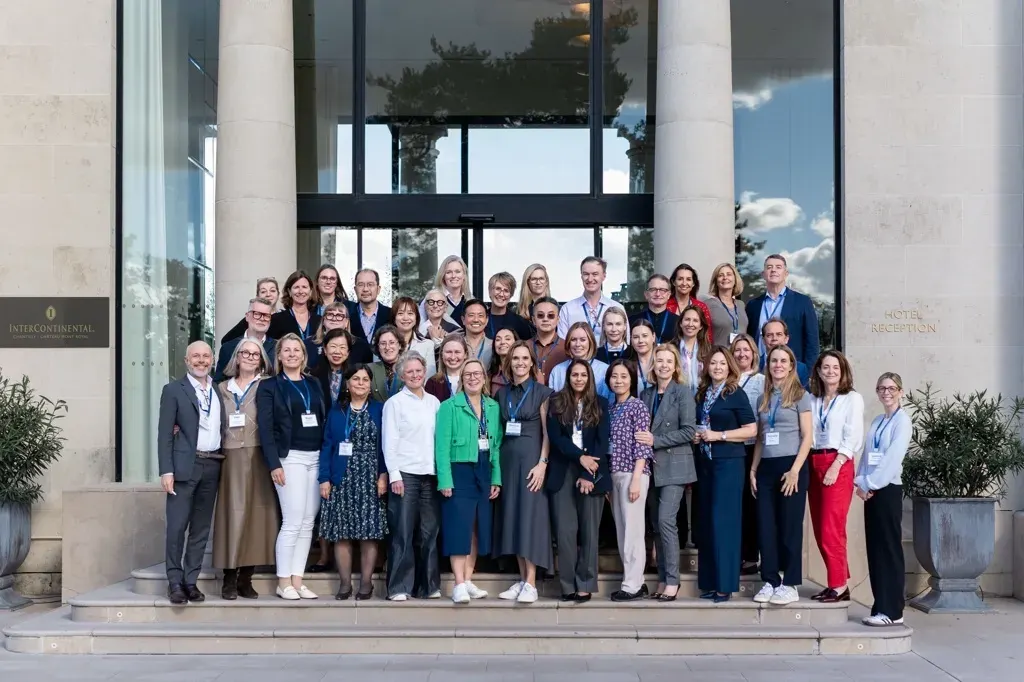
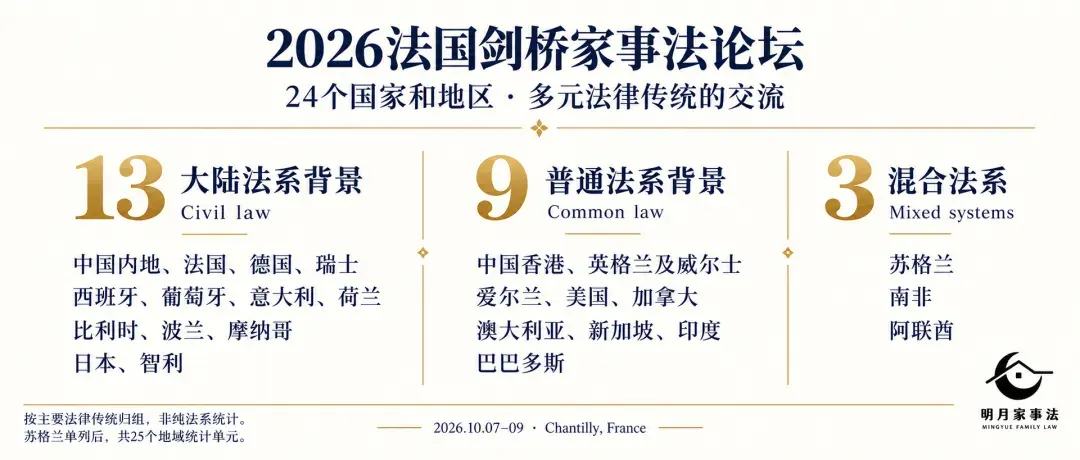
Family lawyers from 25 jurisdictions attended this conference. As usual, the Chatham House Rule applied: we could discuss the ideas but not identify the speakers, and no client information was to leave the room. So below I refer only to “a lawyer from a particular country”.
“The same question can receive completely opposite answers in different countries.”
That was my strongest impression after three days. Russell described diversity as a source of happiness; for family lawyers, diversity is also a source of livelihood.
Prenuptial Agreements: Freedom of Contract or the State as Parent?
Few things reveal how much a country trusts adults as clearly as its approach to prenuptial agreements.
A Spanish lawyer said that in Spain you can waive every right, and a signed agreement stands. In the Netherlands, the task goes to a civil-law notary: neutral and responsible for explaining everything to both parties, the notary removes the need for each to retain a lawyer. An agreement can be signed the day before the wedding and is then centrally registered. A Swiss lawyer said property provisions are almost invariably recognised, but maintenance provisions require court approval, so the only promise available is to “try our best”.
California was described as the other extreme. More than twenty years ago, a baseball star handed an agreement to a bride with limited English the day before their wedding, and the California Supreme Court nevertheless upheld it. The legislature then intervened: independent lawyers, full disclosure and at least seven days between the final draft and signature. More intriguingly, spouses in California owe each other fiduciary duties, so postnuptial agreements receive even closer scrutiny than prenups. While dating, you are negotiating counterparts; once married, you become fiduciaries. On reflection, that makes a certain sense.
A Scottish lawyer posed a searching question: an agreement may be fair when both parties are in their early thirties with equally successful careers, but is it still fair ten years later, after the wife has had three or four children and followed her husband around the world? A French lawyer described receiving an elegant agreement from a Florida lawyer whose client was marrying a French person. Asked to review it, she had only one response: without a French notary, this agreement could not be enforced in France.
When my turn came to introduce China, I explained that Chinese law is relatively flexible about the formal requirements for prenups. It does not require both parties to make complete disclosure of their premarital property or to retain separate lawyers on an equal footing. In practice, many people consider notarisation to improve the prospects of an agreement being respected and recognised by a court years later. I also mentioned the Supreme People’s Court’s new 2025 judicial interpretation: where spouses agree to turn one party’s premarital real estate into jointly owned property, I recommend completing the transfer registration promptly. Without registration, a court has greater room for discretion at divorce. Watching a table of lawyers take notes, I could not help feeling a little proud.
The most dramatic story came from Florida. A prenup contained a “bad boy clause”: infidelity or domestic violence would give the other party a US$50 million mansion; whoever filed for divorce first would also lose US$20 million. The marriage had long since deteriorated, but neither would make the first move. Domestic violence allegations eventually followed, then a police report, criminal trial, jury acquittal and a counterclaim for malicious prosecution. You can probably guess the ending: they reconciled. Clauses that are too ingenious can lock a marriage shut.
Domestic Violence: Rocket Launchers and Soup Spoons
Countries are expanding the definition of domestic violence beyond physical assault to economic and coercive control. How they apply those broader definitions, however, varies enormously.
Australian lawyers explained that courts must consider domestic violence when dividing property. Yet their calculations suggested that even proven serious abuse might produce only about five per cent more of the asset pool, at the cost of extensive evidence and reopening wounds in court. A Canadian account went further, describing a new tort of intimate partner violence that permits direct damages awards, followed by a sharp increase in cases. A Scottish lawyer remarked: “We don’t do tort, because we’re Scottish.”
The California approach was described as a presumption against joint custody for five years once an act of domestic violence is established, with a 52-week perpetrator intervention course to be completed before seeking to overcome it. A Florida colleague put the contrast memorably: “California gives everyone a rocket launcher; Florida gives them a soup spoon.” Florida was described as having a strong presumption of equal parenting time, with domestic violence carrying less weight. A Chilean lawyer worried about the opposite problem: almost anything could count as violence; a protection order could be made on one party’s account alone, removing the other from the home for ninety days. With so many protection orders, genuine victims might become harder to protect.
Every country is still looking for the right balance between protecting the vulnerable and preventing abuse of the system.
Valuation: Horses, Wine, Hermès and Embryos
In high-net-worth divorce, the difficult part is often not division but valuation.
One lawyer recalled a wife insisting that the family horse was priceless: “I hate my husband; the horse is my best friend.” A California lawyer dealing with a wine collection engaged a sommelier, with both parties agreeing in advance to accept the expert’s division. Belgium’s problem was Hermès: the wife called a bag a personal item she had carried; the husband called it an investment and pointed to unopened packaging. A Hong Kong lawyer said some people engrave their names on bags to reduce their value. An Australian account described frozen embryos being treated as property, with allocation taking account of contributions; in one case, the greater burden of egg retrieval favoured the woman. An Indian lawyer explained that the woman’s jewellery was her “dowry property” and could not be touched by anyone else.
Procedures are equally varied. Belgium and France commonly use court-appointed experts. A Polish lawyer complained of a property dispute lasting more than a decade because expert opinions were repeatedly challenged. Switzerland had increased the weight given to party-appointed experts, prompting one party to submit six reports at once. Ontario’s approach sounded the most ingenious: expert “hot-tubbing”. The experts sit together and prepare a joint report identifying agreement and disagreement, leaving only the disputed points to be argued in court.
Disclosure revealed deeper differences. A British lawyer said that in common-law systems lawyers owe their first duty to the court, and a client who conceals assets faces serious consequences; many civil-law countries do not impose the same obligation. A Spanish lawyer frankly described the absence of a disclosure duty: domestic banks and registers can be checked, but overseas assets can be “hidden however you like”. California supplied a classic counterexample: a wife concealed a winning lottery ticket during her divorce and, when discovered, lost the entire prize to her husband.
Child Support: Generosity and Parsimony
A UAE lawyer explained that supporting a child is the father’s legal duty, regardless of the mother’s earnings. Support can include housing, a driver, nanny, tutor and security, a new car every two years, and first-class travel for the accompanying mother. Chile sounded tougher still: payments to age 21, or 28 for those studying, with grandparents potentially responsible as a fallback. Defaulters enter a public register and cannot buy property or cars, obtain loans or leave the country. The lawyer said Chile’s Supreme Court had recently included master’s study, leaving a father paying for a 32-year-old “child” pursuing a master’s in Britain. By contrast, a Monaco lawyer joked about being a “stingy jurisdiction”, and a German colleague said Germany was not generous either. On enforcement, the most memorable line was attributed to a New York judge: “At the next hearing, bring your toothbrush.”
The final session covered AI. Some firms specify in engagement letters that dealing with AI-generated rubbish sent by clients will be charged for. Some lawyers refuse to record conversations, preferring to ask again in person. A Chilean lawyer said a local appellate judgment had even printed the prompt used to generate it. An Indian lawyer raised the most practical concern: if large firms stop hiring first- and second-year associates, where will third- and fourth-year associates come from?
After three days, I remembered not just the rules of individual countries but the choices behind them: trust the individual or protect the vulnerable; respect the contract or seek a fair outcome; prioritise efficiency or procedure. There is no answer key. Only by going out and looking around do we discover where we stand.
07 / NOTAIRE · French Civil-Law Notaries
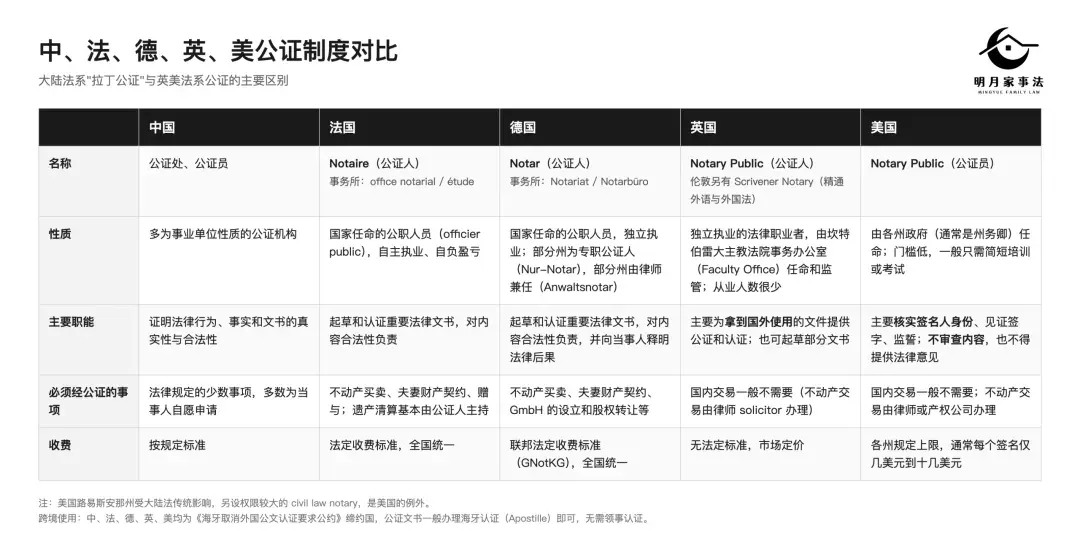
French lawyers spoke of their notaries with great respect. I felt much the same: in China too, a family lawyer can scarcely move forward without notaries. Walking through Paris, I noticed the gold signs outside notarial offices, known as panonceaux. Each office displays one, making them easy to recognise. The emblem is the Great Seal of the French Republic, designed in 1848. The seated woman, Liberty, represents the Republic; the rays behind her symbolise enlightenment. The fasces beside her stand for state authority, the ears of wheat at her feet for abundance and the ballot box for universal suffrage. “RÉPUBLIQUE FRANÇAISE” means the French Republic; “NOTAIRE”, a civil-law notary.
Why display the national seal on a notary’s sign? French notaries are officiers publics, public officers appointed by the Minister of Justice and entrusted with public authority. Their actes authentiques carry the evidential weight and enforceability of official instruments, hence the seal at the door. This reminded me of notary Li Chenyang’s words: “Publicity often calls Chinese notarial offices service institutions. More precisely, they are judicial institutions providing judicial services, assisting and intervening in private affairs on behalf of the state.”
EPILOGUE · Revolution as Routine, Civilisation as the Foundation
Before I left, friends warned me that Paris was in the midst of a revolution. On departure, I could honestly say they had not misled me. There were marches, strikes and slogans, and the news footage could certainly look alarming. But after ten days, my conclusion was this: visitors see the streets; I wanted to see the France behind them.
First, revolution is a French tradition. The storming of the Bastille in 1789, the July Revolution of 1830, the February Revolution of 1848, the upheavals of May 1968: every so often, the French take to the streets for a refresher course. Liberty Leading the People in the Louvre depicts the barricades of 1830. Other countries hang revolutions on walls to commemorate them; the French view the painting and then go outside for a little practice. Taking to the streets in France does not necessarily mean the country is collapsing. Citizens are exercising a right they regard as self-evident.
Second, however lively the streets, the institutional foundations remain steady. The Republic’s seal on the gold notarial signs was designed in 1848, itself a revolutionary year. Revolutions came and went, but the seal remained, and notaries continued issuing instruments with the force of official acts. Then there is Napoleon, the triumphant emperor in The Coronation. In exile on Saint Helena, he said his real glory lay not in winning forty battles but in the civil code that would never be erased. More than two centuries later, the empire has vanished, but the French Civil Code remains in use and has deeply influenced the civil-law world. As a lawyer, I have particular respect for institutions that outlive individuals.
Third, the French know how to preserve civilisation. Palaces become museums; stations become galleries; tax law keeps Picasso’s paintings in France; Monet gives Water Lilies to the nation. When Notre-Dame burned in 2019, many expected restoration to take decades, yet it reopened a little over five years later. A country’s depth is measured not by whether disaster strikes, but by whether it can rebuild afterwards.
Finally, there is permission. The Left Bank allowed Sartre and Beauvoir to sit in cafés all day and struggling writers to sleep in a bookshop; the country likewise allows its citizens to take to the streets and say “no” aloud. A country that can accommodate dissent is often a truly confident one. And the Statue of Liberty illuminating New York Harbour, incidentally, was a gift from France.
Looking back at the claim that “old capitalist countries are all in chaos”, it was only half right. The disorder is real, but it is on the surface. Beneath it lie a two-hundred-year-old civil code, a notarial system bearing the national seal, carefully preserved museums and people who dare to speak and know how to live.
On the day I left Paris, I wrote France a verdict in my mind:
“The streets may be unsettled, but civilisation has never left.”
For the next IAFL meeting, I hope for Greece or Italy. France showed me how a country can retain depth amid turbulence. I would also like to see where that depth first began.